Turn insight into action
We help you solve the problems that matter most so you can act faster and move further.
What would you like to explore?
How we make
Domain defined
Where human needs, technology, and industries converge to make
Manufacturing is evolving alongside the global economy, driven by rapid technological advancements, supply chain challenges, climate imperatives, and a competitive talent landscape. Traditional production models are transforming into dynamic systems where intelligence, automation, and sustainability are integral. This shift is crafting a new manufacturing landscape—one that prioritises speed, resilience, and adaptability from the start.
The Make domain unites manufacturers, tech innovators, material pioneers, logistics experts, and energy systems to develop smarter, cleaner, and more responsive production methods. Dive into the sections below to discover how this convergence is redefining value creation across industrial ecosystems, and how organisations can position themselves to lead in the next era of manufacturing.

How to win in the Make domain
The dynamics
Explore the Make domain
The Make domain marks a transition from isolated, linear manufacturing to a cohesive, tech-driven production system. Innovations in AI, automation, additive manufacturing, and data infrastructure enable continuous product design, production, and improvement—often across distributed networks. As these models expand, manufacturing is no longer just about throughput or cost. Value is increasingly derived from the integration of intelligence, materials, energy use, and supply chains to deliver resilience, adaptability, and performance by design.
Technology is reshaping manufacturing. AI-driven analytics, digital twins, robotics, and IoT platforms allow real-time modelling, optimisation, and adjustment of production systems, from R&D to ongoing operations. As production becomes more data-centric, technology redefines decision-making, asset management, and outcome control. Data not only boosts efficiency but also determines value capture, risk sharing, and organisational agility in the face of disruption.
The forces reshaping the Make domain demand more than incremental efficiency. Supply chain volatility, climate mandates, geopolitical risks, and talent scarcity require a reinvention of operating models and business roles. Manufacturers are moving beyond isolated production to platform-enabled systems, service-based offerings, and deeper collaboration with tech, logistics, and energy partners. Those who rethink value creation beyond mere production are better equipped to adapt, scale, and compete in an uncertain environment.
Opportunities in the Make domain are emerging at sector intersections. Manufacturers are integrating data platforms, energy systems, and material innovations into their core offerings. Tech firms are embedding intelligence directly into production and asset management. Service providers are expanding into lifecycle optimisation, circularity, and outcomes-based models. As manufacturing evolves, value is shifting from volume-based production to integrated systems, long-term services, and differentiated capabilities that meet complex customer needs.
The Make domain is interconnected with material sourcing, asset powering, data flow, and risk management. Advances in manufacturing drive progress in construction, the energy transition, mobility, and healthcare. Circular production models link Make directly to sustainability and climate goals. Understanding these connections helps leaders view manufacturing not as a standalone sector but as a central engine within a larger growth system.
Featured insights
Industrial manufacturing’s race to 2030
Accelerating automation, AI adoption, and stronger ecosystem collaboration will define the winners—and leave others playing catch-up.
Value in motion
Discover the future of your industry with PwC's Value in motion study. Learn how AI and climate change are reshaping industries to create new growth opportunities.
Industrial manufacturing: US Deals 2026 midyear outlook: M&A Trends
Industrial manufacturing M&A surges to $173 billion: What's fueling the momentum?

Are factories the new frontier of big tech?
Episode 8 explores the radical rethinking of the way we make things, the impact of automation on the workforce and the opportunities this shift brings for new types of businesses.
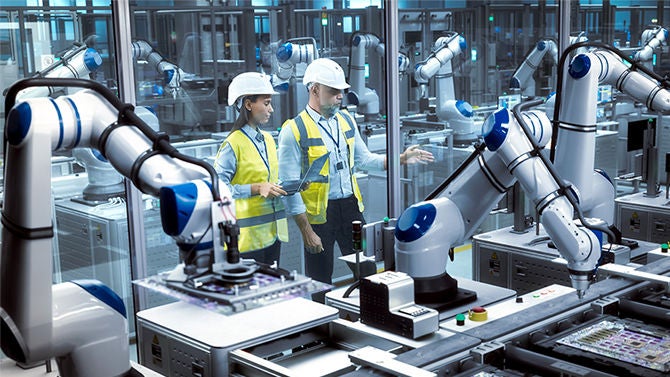
Frontline leadership in manufacturing’s AI adoption
A PwC and Manufacturing Institute survey shows how frontline leadership shapes manufacturing AI adoption, and where readiness, trust and training gaps remain.
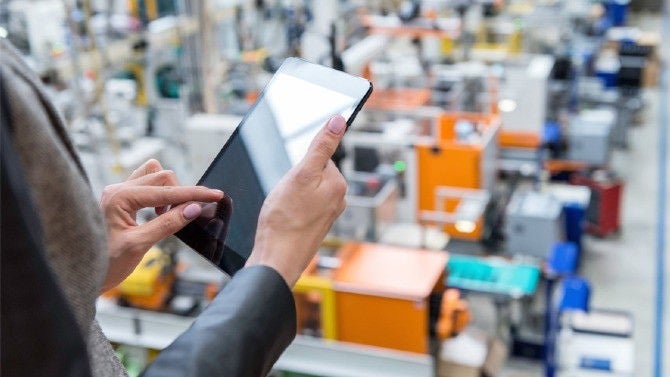
Connected plants are pushing industrial manufacturing beyond ERP
Manufacturers use "base plus" model to enhance productivity via a stable core and cloud-based intelligent systems for innovation and efficiency.
Key sectors
Explore the key sectors shaping the Make domain
The business services sector is reshaping how we make by crafting efficient processes, managing risks, and introducing innovative models. As industries embrace digital transformation and move towards sustainability, they collaboratively build vital capabilities for manufacturing, logistics, and retail. Automation, AI, and data are revolutionising how work is delivered and monetised. Leaders should work to transform their expertise into tangible products, integrate analytics and automation into every interaction, and share value based on clear, measurable outcomes.
Engineering and construction lays the groundwork for how we create essential structures like plants, logistics hubs, renewables assets, and smart cities. As these assets evolve to be more digital, modular, and low-carbon, they pave the way for efficient and resilient production systems. Digital twins, modular methods, and sustainable materials are reshaping asset planning and construction. Leaders should embrace platform-based design, expand offsite manufacturing, and leverage lifecycle data to provide long-term service and performance contracts.
Industrial manufacturing is where inputs and digital intelligence transform into products and services at scale. Connected, autonomous, and low-carbon factories are driving productivity and sustainability. Digitised production, resilient supply chains, and circular models are redefining competitiveness. Leaders should scale industrial IoT and AI, redesign for closed-loop material flows, and collaborate across the ecosystem to develop new products and “as-a-service” models.
The mining and metals sector makes up the backbone of how we create, supplying critical minerals and low-carbon materials for manufacturing and infrastructure. As demand for cleaner, traceable inputs grows, the sector becomes a strategic enabler of resilient supply chains. Automation, real-time data, and low-carbon operations are reshaping resource extraction and refinement. Leaders should invest in smart technologies, build circular value chains, and establish long-term partnerships with OEMs to secure offtake and premium markets.
Retail bridges the gap between production and consumption, generating demand signals that guide design and sourcing. As channels merge, data and experiences increasingly influence upstream decisions. Data-driven merchandising, unified commerce, and agile supply chains are reshaping value creation. Leaders should connect demand data to suppliers, invest in circular offerings like resale and repair, and explore subscriptions and outcome-based models that reward lifetime value.
Technology acts as the orchestration layer of how we make by powering smart factories, supply chains, and circular flows. AI, cloud, and platforms determine how quickly businesses can reconfigure production and scale new offerings. Successful companies will industrialise software delivery, monetise data, and embed security by design. Leaders should prioritise interoperable platforms, build shared data models with partners, and invest in AI that directly enhances efficiency and sustainability.
The transportation and logistics sector connects materials, components, and finished goods across complex global networks. As production becomes more distributed and on-demand, logistics is key to balancing cost, speed, resilience, and emissions. Electrified fleets, autonomous delivery, and micro-fulfilment hubs are transforming last-mile economics and expectations. Leaders should develop AI-enabled control towers, invest in real-time visibility, and co-create low-carbon, data-rich solutions with manufacturers and retailers.
Your next move
Turning Make domain insight into action
As the Make domain industrialises, leaders face critical choices about where to play, how to scale, and which capabilities will define advantage. We help organisations translate domain insight into practical action across strategy, technology, and sustainability.
Manufacturing is shifting from traditional industry silos to connected ecosystems, where value is created across design, production, services, and data. We help organisations rethink their role in that system, redesign operating models and business models, and build partnerships that unlock new routes to growth.
AI, robotics, IoT, and additive manufacturing are transforming how products are engineered, produced, and improved, driving smarter processes and smarter offerings. We support organisations in putting the right digital foundations in place and scaling these technologies across plants and networks to improve productivity, agility, and performance.
Resilience and sustainability are becoming the new competitive edge, from securing critical materials and improving traceability to decarbonising operations and building circular production systems. We help organisations embed governance, transparency, and low-carbon innovation across value chains, reducing disruption risk while capturing value in the climate transition.
Domains of growth
Explore other domains of growth
The Make domain is part of a broader shift as industries reorganise around fundamental human needs. Explore how value is also being reshaped across other domains, and how these connections create new opportunities for growth.
Get in touch

Ryan Hawk
Global and US Industrials and Services Leader
PwC United States

Sudipta Ghosh
Data & Analytics Leader
PwC India
