

176
CEOs and senior business leaders across various industries in the Philippines participated in the survey

Leading through uncertainty. From confidence to action
%
are confident about company revenue growth over the next 12 months
%
have incorporated AI into their strategic or business plans
%
say innovation is a critical part of their overall business strategy
Overview
Turning confidence into reinvention
The Philippines enters 2026 at a critical inflection point. As the country assumes the ASEAN Chairmanship, businesses are navigating geopolitical tensions, economic volatility, regulatory uncertainty, and the transformative impact of AI while seeking new sources of growth.
The outlook among Philippine CEOs remains positive. Most remain confident about growth, with confidence strengthening as CEOs look further ahead. Yet confidence does not equate to complacency. The survey reveals a growing recognition that the business models and competitive advantages that delivered success in the past may not be enough to sustain relevance in the future.
This year's findings highlight a defining paradox: CEOs remain confident in their ability to grow, yet fewer than half believe their businesses would remain economically viable beyond a decade if they continue on their current path. Growth remains attainable but increasingly depends on an organization's ability to adapt, innovate, and reinvent itself.
In response, AI, innovation, talent, partnerships, and new markets are moving higher on the strategic agenda. The findings point to a new leadership mandate: balancing today's performance with the capabilities needed to compete tomorrow. In an era of constant change, the ability to turn uncertainty into opportunity, and confidence into action, may become the most important competitive advantage of all.

Confidence holds – but the ground is shifting
Philippine CEOs remain confident about growth despite a more volatile operating environment.

What will drive Philippine economic growth in the next 12 months?
Confidence is underpinned by the domestic economy. CEOs identify domestic consumption as the country's leading growth driver, followed by infrastructure development and government spending. OFW remittances, BPO and services, and AI and digital transformation also contribute to the growth outlook.
Which government actions would most improve business confidence over the next three years?
CEOs are signaling that confidence depends not only on economic growth, but also on the quality of the business environment. Ease of doing business and regulatory reform rank ahead of infrastructure delivery and energy security among actions that could strengthen confidence.
Other governance or administrative concerns: <0.1%
Of course, one counsel is to dig a foxhole and just wait it out ... That's not what the business sector should do. It should continue to invest in the country and create more jobs. I think we have to fight these uncertainties and not take a very passive position.”
Manuel V. PangilinanChairman, PLDT and Metro Pacific Investments CorporationFault lines beneath the optimism

The geopolitical map is changing
Among specific geopolitical developments, Middle East instability emerges as the greatest perceived risk, followed by US–China tensions. Global supply-chain fragmentation, West Philippine Sea tensions, and trade restrictions and tariffs are also prominent concerns.
ASEAN opportunity amid fragmentation
Geopolitical fragmentation also creates an opportunity closer to home.
As the Philippines assumes the ASEAN Chairmanship in 2026, deeper regional integration could give businesses greater access to neighboring markets, facilitate supply chain diversification, and create new avenues for investment and collaboration.
Easier access to ASEAN markets ranks as the leading opportunity identified by CEOs. Lower trade barriers, digital infrastructure and the data economy, greater foreign investment within ASEAN, and regional supply-chain integration follow.
Build resilience without retreating from growth
Uncertainty can encourage caution. But resilience is not simply about protecting the existing business. CEOs can use scenario planning, partnerships, and regional diversification to position their organizations for different outcomes while continuing to pursue opportunities for growth.
“As much as we got hit with all these tariffs and higher oil prices, we still sit in a very good position on opportunities because of the global search now for new partners and new supply chains.”
Perry Ferrer Chairman and CEO, EMS Group of Companies and Philippine Chamber of Commerce and IndustryFrom AI ambition to action

The AI readiness gap
Philippine CEOs report strong cultural and technology foundations for AI, but readiness becomes less consistent when the questions turn to roadmaps, governance, investment, and talent.
To realize AI's full potential, organizations must move from AI intention to enterprise capability—and ultimately to sustainable and measurable business value.
The objective is not simply more AI. It is more value from AI.
“The challenge now is on leadership of organizations not to use AI as an extension, but as a business model change.”
Donald L. LimPresident, DITO CME Holdings and Management Association of the Philippines“Any institution that wants to put AI in has got to be prepared to experiment. What we do is we put a human in the loop.”
TG LimcaocoPresident and CEO, Bank of the Philippine IslandsAI use cases

Reinvention becomes the growth imperative
What is rising to the top of the CEO agenda? Their responses highlight where business leaders see the greatest opportunities.
Their leading investment priority is workforce upskilling, reskilling, and talent transformation, closely followed by process automation and productivity transformation. Strategic partnerships, AI and digital transformation, new markets, and new products and business models also rank prominently.
Building competitive advantage
CEOs' investment priorities reveal a shift from pursuing growth alone to building the capabilities that make growth sustainable. Talent transformation tops the list, while investments in productivity, technology, strategic partnerships, and innovation reflect a broader effort to build more adaptable, resilient, and future-ready organizations.
But execution is the test
The two largest barriers to strategy execution identified by CEOs are talent retention and skills shortages (21%) and resource constraints (20%). CEOs also struggle to balance short-term pressures with long-term goals.
Businesses want to invest in transformation—but the talent and resources needed to execute it are themselves in short supply.
Innovation ambition versus innovation discipline

The practices needed to turn innovation into repeatable capability are less widespread. While 92% view innovation as a critical part of business strategy, fewer organizations report having the structures and disciplines that support systematic innovation.
The results suggest a distinction between valuing innovation and institutionalizing it. This echoes one of the strongest themes in PwC’s 29th Global CEO Survey: CEOs recognize innovation as strategically important, but specific practices that support systematic innovation are much less widely embedded.
Turn innovation from aspiration into capability
Innovation requires more than ideas. Companies need mechanisms to experiment, collaborate, listen to customers, allocate resources to promising opportunities—and stop initiatives that are not delivering.
The organizations that build these disciplines can make innovation part of how the business operates, rather than an activity that sits alongside it.
“Five years ago, it’s about scaling. Now it’s about adapting. The entrepreneur that can adapt faster to the technology can create better value.
Steve SyCEO, Great Deals E-Commerce CorporationFrom confidence to action
Philippine CEOs enter 2026 with confidence in their companies, their industries, and the country's growth potential.
But beneath that optimism is a clear recognition that the environment is changing.
Only 46% believe their businesses can remain economically viable beyond ten years on their current path. CEOs are navigating geopolitical and regulatory uncertainty. AI adoption is accelerating, but important readiness gaps remain. Innovation is widely viewed as essential, but the disciplines needed to scale it are less widely embedded. And talent—the leading area for investment—is also the biggest barrier to execution.
The message from the survey is therefore not one of pessimism. It is one of urgency.
The businesses best positioned for the next decade may not simply be those that predict uncertainty correctly. They will be those that build the capacity to respond to it—investing in people, deploying technology with purpose, strengthening innovation capabilities, forming new partnerships, and continually reassessing where and how they create value.
The question for Philippine CEOs is no longer whether change is coming. It is whether they can turn confidence into action fast enough.
2026 Philippine CEO Survey
Download
CEO videos
Act on the insights behind the numbers



Contact us
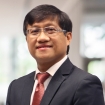

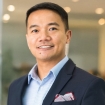
Vice Chairman and Assurance Managing Partner, PwC Philippines
Tel: +63 (2) 8845 2728

Mary Jade T. Roxas-Divinagracia, CFA, CVA
Deals and Corporate Finance Managing Partner, PwC Philippines
Tel: +63 (2) 8845 2728

Follow PwC Philippines


