What is ESG?
The evolution of corporate sustainability
Sustainability emerged as a topic in the 80s from environmental issues to a broader set of subjects. It has evolved from the “do no harm” and public relations approach of “CSR” to a holistic approach of creating and protecting value through proactive management and reporting of environmental, social and economic impacts as well as stakeholder concerns and expectations. The pursuit of achieving sustainability and alongside with the changing of global era has urged and transformed the investments to be not only financially but also social and environmentally sustainable. Therefore, there is an arising need for the development of a regulatory framework that defines sustainable investments and links Environmental, Social and Governance (ESG) factors in the investment decision–making process and access to funds. Corporate sustainability criteria are now core issues guiding the ever-increasing “sustainable” or “ESG” investing.
Linking Sustainability and CSR to Sustainable investment
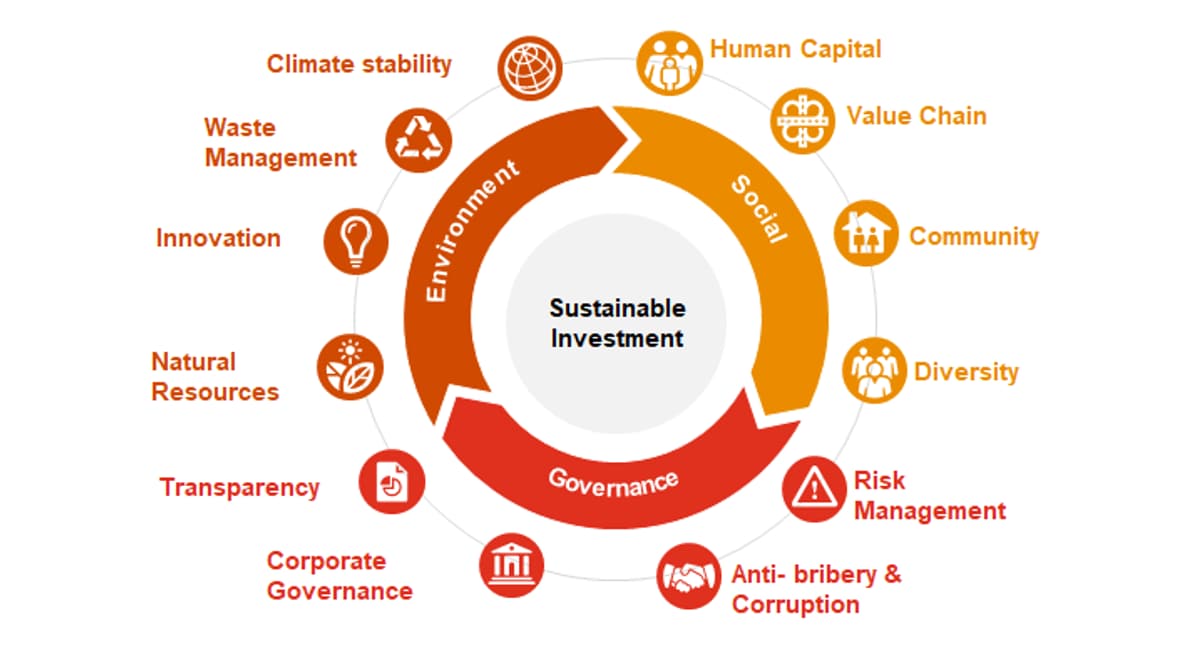
Investors are increasingly factoring sustainability considerations into their investment decisions and portfolio management strategies
According to a PwC Private Equity Responsible Investment Survey conducted on 2019, with a total sample of 162 respondents, the following significant results were arisen:

81% of respondents report ESG matters to their Boards at least once a year

67% of respondents have identified and prioritised Sustainable Development Goals (SDGs) that are relevant to their investments (compared to 38% in 2016)

91% of respondents have already adopted or are currently developing a responsible investment or ESG policy

83% of respondents are concerned about climate risks in their portfolio


