Turn insight into action
We help you solve the problems that matter most so you can act faster and move further.
What would you like to explore?
The future of how we build
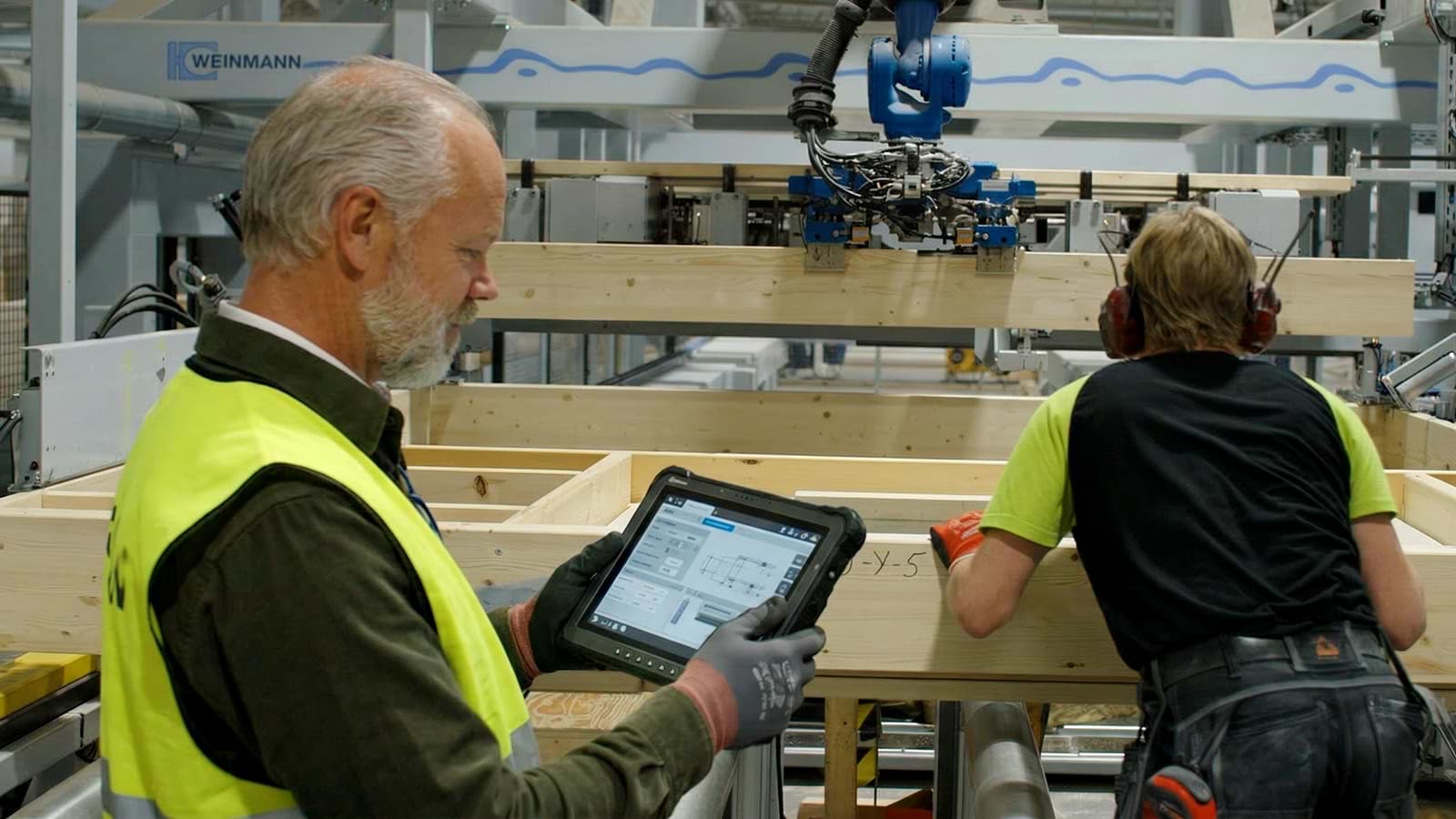
Human moments of problem solving, powered by technology, are triggering industry reconfiguration. Discover how modular construction, digital design, and cross-industry collaboration are reinventing how we build.

The dynamics
Building at the intersection of human needs, technology, and industries
It starts with people solving real problems. In Stockholm, housing demand is pushing new ideas from the drawing board into reality. Families need homes sooner, and that urgency is driving a smarter way to build. Architects, planners, and factory teams are redesigning housing around three goals at once: speed, affordability, and sustainability. Sweden’s answer is modular construction. Homes are made with precision in factories, then quickly assembled on site in days––with less waste, fewer delays, and greater certainty.
Today, those on-the-ground innovations, from off-site manufacturing to digital design and energy systems, are scaling far beyond housing. What began on factory floors is developing into a broader Build domain, where construction firms, manufacturers, technology providers, investors, and insurers work together to deliver infrastructure faster, more sustainably, and at scale.
For executives, the implications are clear: building is no longer a siloed industry. It is a cross-industry ecosystem organised around the human need for places to live, work, and connect. Leaders who act now to industrialise delivery and integrate sustainability will be best positioned to capture shifting value.
Your next move
Five actions to seize the US$13.76tn Build opportunity
Reimagine your role in the ecosystem
Decide where you create the most value in the Build ecosystem—not as a standalone player, but as an orchestrator, integrator, or specialist operating across industry boundaries.
Industrialise construction through modularity and digitalisation
Use AI, automation, and digital twins to scale modular and offsite construction, empowering you to deliver buildings and infrastructure faster, cleaner, and with greater certainty.
Build partnerships to unlock scale and resilience
Use cross-industry partnerships to secure labour, materials, capital, and technology, turning today’s constraints into sources of competitive advantage.
Turn sustainability into a value driver
Embed circular design, low-carbon materials, and energy-efficient systems into every stage of the build lifecycle to reduce costs, manage risk, and open new revenue streams.
Plan for multiple futures
Stress-test your strategy against divergent AI and climate scenarios and invest early in capabilities that will perform across them, regardless of how the future unfolds.
Domains of growth
Select your industry to uncover its highest-value domain of growth
Your greatest opportunity lies in the Feed domain—where reimagining how we produce, distribute, and consume food opens new avenues for growth while addressing one of humanity’s core needs.
Consumer expectations are evolving towards healthier, more sustainable, and transparent food systems. And as climate risk, waste, and inefficiency challenge today’s value chains, leaders who act decisively can create value by reinventing business models across agriculture, technology, and food services.
Investing in smarter production and tech-enabled supply chains allows organisations to cut waste and boost resilience. By fostering cross-sector collaboration, they create unique offerings that meet rising demand, without compromising the planet—transforming systemic pressure into a lasting engine of growth and relevance.
Your greatest opportunity is in the Fuel and Power domain, where the global drive to decarbonise energy systems is transforming how value is created, captured, and sustained.
Industries today are tackling the dual challenges of reducing carbon footprints and providing reliable, affordable energy. By acting decisively, you can unlock growth by reimagining operations around energy improvement, low- and no-carbon fuels, and resilient infrastructure. By rethinking how energy is produced, stored, and consumed—and by using technologies that boost efficiency and manage volatility—leaders can cut costs, strengthen margins, and build long-term resilience. This positions organisations at the heart of a rapidly growing energy sector, where sustainability and business performance progress together.
Your greatest opportunity is in the Fund and Insure domain, where the shift in financial services is creating new paths to boost growth, manage risk, and encourage change across all areas.
Industries are evolving to meet human needs while tackling climate challenges, tech disruptions, and capital demands. The value now lies with those who creatively use private capital, move from reactive to predictive insurance, and collaborate across ecosystems to finance complex transitions. Engaging in this sector lets leaders access adaptable capital, smarter risk solutions, and innovative financing models. This shifts funding and insurance from back-office roles to strategic drivers of resilience, innovation, and long-term growth.
Your biggest opportunity is in the Govern and Serve domain, where governments and public institutions are reimagining their roles as enablers, orchestrators, and partners in our increasingly connected world.
As traditional industry boundaries fade, we find value in using data and AI to make faster, smarter decisions. This transformation drives services to become digital, proactive, and trustworthy. We need to build ecosystems that bring together public and private strengths. This domain offers untapped growth through collaboration with the public sector: co-creating solutions, modernising procurement and delivery models, and shaping the platforms and infrastructure that allow every other domain to flourish.
Your biggest opportunity is in the Care domain, where increasing demand, rapid tech advancements, and evolving consumer expectations are reshaping care delivery and value creation.
As populations expand and age, traditional care models are transitioning to a connected ecosystem focused on prevention, personalisation, and outcomes—driven by data, AI, and new care settings beyond hospitals. Leaders who step into this domain can power growth and help consumers by improving outcomes with data insights and working across industries to make care more accessible, efficient, and trusted. Our systemic challenges can be transformed into opportunities for innovation and enduring relevance.
Your biggest opportunities are in the Move, Make, and Build domains—where industries are being reshaped, changing how goods are made, infrastructure is built, and people and products move globally.
As mobility systems become electric and digitised, manufacturing gets smarter and more connected, and the built environment shifts towards sustainability and resilience, leaders who combine technology, data, and partnerships across these areas are gaining value. Let’s rethink how we design, produce, transport, and construct. By not viewing these activities in isolation, leaders can create new business models and boost productivity. This approach positions your organisation at the forefront of faster, cleaner, and more efficient value chains, which are quickly reshaping traditional industry boundaries.
Your greatest opportunity is in the Fund and Insure domain, where the transformation of financial services is opening new avenues to drive growth, manage risk, and foster change across all areas.
As industries adapt to human needs and face climate challenges, tech disruptions, and capital demands, value is shifting to those who can creatively use private capital, shift from reactive to predictive insurance, and collaborate across ecosystems to finance complex transitions. By engaging in this sector, leaders can tap into more adaptable capital, smarter risk solutions, and innovative financing models—elevating funding and insurance from back-office roles to strategic drivers of resilience, innovation, and long-term growth.
Your biggest opportunity is in the Connect and Compute domain, where the rising need for connectivity, computing power, and AI-driven infrastructure is sparking growth across industries.
As demand grows, the real value lies with those who can update digital infrastructure, enhance data-centre and network capabilities, and collaborate across ecosystems such as fibre, wireless, satellites, and cloud. By expanding into this domain, leaders can unlock new revenue streams by advancing from basic infrastructure to smart, AI-ready platforms. This shift allows for quicker innovation, real-time services, and robust operations that drive the next wave of business models.
Featured insights

Global Infrastructure Outlook 2025–50: Accelerating human progress
A staggering US$151.1 trillion of capital is needed to build and maintain infrastructure in the coming decades.
Value in motion
Discover the future of your industry with PwC’s Value in motion study. Learn how AI and climate change are reshaping industries to create new growth opportunities.

Could robots be renovating our homes in the future?
What if we completely rethought the way we build? With insights from Emanuel Heisenberg, CEO and founder of Ecoworks.
