Podcast transcript: Episode 4 - The Digital Trader
Transcript
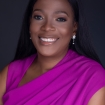
Host: Good morning. My name is Ada Irikefe and you’re listening to the Experience Pod. The Experience Center podcast discusses the adoption of relevant emerging technologies and trends for impact-oriented professionals and individuals who demand realistic and thought-provoking perspectives on the opportunities and challenges presented by these phenomena in a unique environment. Today, we will zoom into the FinTech space and the broader challenges in the corporate and capital market. How is this market expanding? How is technology driving new competition and innovation within this market? So addressing those questions will be Mr Uwa Agbonile, CEO of Infoware, a B2B financial software company in Africa. Welcome Uwa, it's great to have you here.
Uwa: Thank you very much.
Host: So please tell us a little bit more about Infoware for the benefit of our listeners.
Uwa: Okay. So at Infoware, what we do really at the end of the day is to provide software, enterprise software for buy and sell side institutions. Just one simple word. So the sell side down to the entities like the brokers, people that have provided input into the market; then the buy side, those that, like the fund managers, the asset managers, people that do the actual investment, per se. So that's kind of the long and short of it on both sides. Now, in that mix, there's a whole range of services that need to be provided. Some of them are back office, back office meaning- let's take an example. So maybe you have shares or you buy, say, MTN through a broker. That process of going to the broker, that’s what they have to do, they would register your KYC and there are some regulations and regulations, stuff like that. Before you purchase, you have to have funds for it, so there is a transfer facilitator need, we have to solve that problem. There is the experience of registering and getting your registration number, we have to solve that problem. Then, there’s the experience of knowing what the risk is, should you buy another or not? And it's all real-time. Currency exchange.
Then, there is the other side of, okay, you know what? Buying stocks directly may be too risky, it's too traumatic. Let me just buy a major fund and let a professional fund manager do all the work for me and reduce my risk. So a fund manager, essentially, you're buying into a pot. When you buy a single equity, you’re taking the entire risk on that portion. So less sophisticated investors, usually people by phone or an ETF or stuff like that. But on the fund manager's side, they will, you know, the same kind of rules apply; KYC shall register, they fund it, then manage the money, and they do it on a day-to-day basis. So, anyway, they have social handles, all of that.
Host: Okay, so would you say- Obviously, technology has played a major role because I'm thinking five or six years ago, the process of buying assets or even buying stocks was a very tedious, very manual, very stab in the back process. So would you say that Infoware is bridging that gap or has made that whole exercise seamless?
Uwa: Absolutely, without a doubt. You know, I call it an impedance mismatch, let me use that word; where sometimes you want to do something and you’re not quite sure, they don’t quite rhyme very well. So part of it was that previously you needed to talk to a broker for literally everything.
Host: Yeah.
Uwa: That was a major impedance mismatch which means I couldn’t be at home and I couldn't avoid traffic. But today, you can do everything yourself. You can do all the training, you can transfer your funds, and solve the fund transfer problem. You can go online either on mobile or desktop and do the trade yourself with no human trust required. Right? Then the third option is also crystal, that we’re solving and that’s also very important is, okay, you want to buy these shares, and that is real-time, is how do I know what I'm doing? How much visibility do I have in the market? How much knowledge do I know about how that equity, that bond, or whatever is doing? So the two sides of it, there's an aspect of it with the fund, while you're in that space where you want to buy and sell, would provide as much information as possible-information that other professionals would have. And now we’re bringing the information that professionals would have had exclusive rights to all the way down to the retail space. So that everybody feels comfortable.
Host: Okay, so would you say that you're also providing advisory services?
Uwa: So we are not advisory because as a tech company, we're not under regulation to provide advisory services.
Host: You just provided enough information.
Uwa: You can consider us an enabler. So, people that do call advisory services have to talk to their legal advisory provider service. Now, having said that, we actually do provide advisory services. Okay. So we have a portal, for example, finance.infowarelimited.com, anybody can go there. We actually have an AI power advisory. So what I will do is, I will walk you through a series of questions, and then give you your profile, basically, to analyze your risk profile. So that you know, okay, should I really go and start buying assets or should I just probably buy bonds, or should I just settle for major funds? Right. And what is nice about that, is that there is less pressure. There are two sides to it, I want to actually use my mind. Now, that's a lot of pressure to make your own decision. One of the things we've really tried to do a much better job of is how we gain courage and facilities, especially in which people can learn in a realistic form, but we ain’t taking any risk. So create a set of platforms, all of them powered by- they are all API driven. We have a platform called Grow My Kudi. One of the goals of Grow My Kudi is to solve these financial equation problems. If you ask somebody to go and- first of all, studies show that people are extremely risk averse, people feel more pain towards the loss than gain, right? I mean, that's just human nature, right? So therefore, we need to solve that problem of having people not feel that much pain or feel the amount of risk that they will take, they need to understand. So you get a bunch of people, or you're qualified to do it yourself. And you go in there, you create what's called a simulation of games, and a wizard walks you through it. You get a pot of monopoly money essentially, but the returns you get would be exactly equivalent to if you had used real money. Yes, really. Because even here, we are marketers vendors, we have the same direct access to marketers as the rest of them.
So let me give you a simulation example. Let’s say you and I set up the game. To make it a point, you know, we both stand up. And let's assume that you say you know what, I don't want to, let's assume I pick a stock liquid, maybe Ico or something like that. Now, on a non-realistic simulation, I could say I’m buying Ico and I could say I’m buying 1 million for today at this price. If I get lucky, maybe I could move up ultimately with just 10% and go on. But in the real world though, if I had put that 1 million into Ico, chances are that I wouldn’t get my entire 1 million because there is not enough liquidity to sell and I may want to sell and not get any buyer. But in rudimentary simulation, I just play and I get. But that’s not what ours does. Ours would actually look at the market at that point. It will look at the Boffers and match you to realistically what is there. This means, if you had been a professional trader or a new trader with your real money, that is what would have happened.
Host: So, Uwa, a real market but fake money.
Uwa: Exactly, that exactly. It's a real market but fake money. So by the time you experimented with that once or twice and you started to get the true feel of what is going on.
Host: Hm! Sure.
Uwa: So it’s not like you just put it there and, you understand what I mean?
Host: Sure. I guess it’s … do a review on how to play.
Uwa: Yes.
Host: For people like us who are very risk averse. Definitely yeah.
Uwa: You should try it.
Host: I will certainly try it. So going straight into it, we're talking about trends now. We’ve talked about the FinTech industry in Nigeria and Africa. How do you guys currently contribute to the product and growth of the FinTech ecosystem?
Uwa: Excellent question. Excellent question. So we have close to 7% market share in terms of the sell side of the equation right now. So that's an interesting question. We need to start looking at not asking people what they want, we need to look at what the industry needs. Where is the industry going? And be there before the industry even knows where it's going. We know when we deal with so many customers that we cannot begin to see who can connect the dots as to the kind of situations and problems that they all have. So short form would be, by identifying key problems, it takes too long for investors to register and trade. So we’re working with CSCS to bridge that gap.
It’s too expensive to move money to get investment, investment money is not purchasing stock, so part payments are rather expensive. So we're working with Nerves and with payment, and car companies; so how do we facilitate that and make it easier? So many of them have like 3,000 or 20,000 and want to invest, how will we make it easy? And you know, there is this common notion called impulse buying. If I want to do something, it takes me two hours, three hours to do something. To solve that problem, we need to reduce it to literally seconds, minutes at worst. Right? We're working directly with NFCL to see how we can work together to solve these problems. Bringing additional liquidity into the system, so that people feel more comfortable. For example, Santander, free, by the way, is meant to make people comfortable, nobody wants to take the risk on their real money unless they know what they are doing. Right? Then the other part is, people were just uncomfortable. How do we create an ecosystem that can scale up and make people more comfortable? These things I’m talking about as Gromyko defines; they are all platform based, all APIs. So we want to encourage other Fintechs to come in and build on this platform. When you want to open some of our decoders there,(11:54-12:02)
To bring in an entire ecosystem that can be innovative. As a platform, we solve the really really hard problems, providing market data, and making things real-time without taking somebody two years to build.
For the experiential portion, I don't think we have (12:19-12:24) that’s where the fast-moving, rethinking, innovation thinker guys are taught. Bringing those people into the ecosystem and then expanding. So that we benefit from everybody and we can bring people financial inclusion. Because I’m a member of the reset FinTech committee and that was one of the key things that were discussed, that was part of the report that came out not too long ago. So we're trying to play our part in making that happen.
Host: What's your perspective on the challenges of mass production? So education barriers, customer experience, we've talked about customer experience and the performance of the market itself.
Uwa: In terms of mass adoption, I think one person is against education, education. And in reducing or minimizing a lot of hindrances and impedances that stand in people's ways. Let me speak for Infoware, for example, so we have (13:20).. with universities. It is critical, we need to have the younger generation understand this and not see…
Host: And early enough too...
Uwa: Exactly.
Host: I don’t think investors…
Uwa: We’re completely happy and willing to partner with anybody. Currently, for example, we partnered with Pan-Atlantic University. So these professionals (13:41-13:47) it’s a research tool, data analytics research, we have data points across all African countries currently. So Pan-Atlantic University is going to incorporate that into their curriculum both for their farewell team and for their students. Employers have this challenge. And this is a worldwide problem. You bring people in, and you realize they really don’t have the skills. So how are we trying to solve that problem? By enabling the institutions, this is something we are really passionate about- working with universities and even we work with lower levels... So that students right from the get-go are better prepared for the workforce. Not just, but also know what you're talking about, not in some sort of theoretical…
Host: But practical.
Uwa: Also practically. The day they walk out of that school, they already have a range of skills, a range of skills that an employer immediately finds valuable and useful. And it will make the student themselves far more confident. They understand the way the work should be, not just the way they think it is. So these are the things that we are doing. That’s one reason I talk about- like that (15:06-15:12) so when we do that right, then. You see, we know in economic terms, it’s not just- You know, in the economy, it has this ripple effect. The ripple effect is active at the end of the day. In my view, the biggest companies in the world are never the ones that sell things that are worth a million dollars. They are companies that sell the smallest of things. Look at Facebook, they sell tiny little things, like Google, sense right? So I want us to build this ecosystem... If we have a population of 200 million, what’s the participation thereof? In the banks, for example, it’s about 40 million, alright? Turn to bank accounts, ATM alone has over 40 million subscribers. In capital markets, we have less than 200,000 active accounts that are working. Imagine if we could raise that to just a million even if the size of the transaction they do is much smaller, the ripple effect is just going to be absolutely beyond what we can imagine right now.
Host: Okay, how to plan to help your clients tap into the use of data?
Uwa: Data is getting increasingly important. And we are now getting to the phase where we want to start (16:30). In our case, we are still on a …with data. Like all this talk I’m talking about... It’s a mountain of data that we want to sort. We want to work with other FinTechs. So instead of them trying to build a body of data up from the scratch again, why don’t we just…
Host: ...into what we have already.
Uwa: …media, being able to do that. And we have a number of our customers and a number of others that have been using that facility to right now create products, analytics that can tell you. Because you can use it to measure risk. For example, let’s assume I have a comparison. I want to buy Mtn or Access, which one should I buy? Well, you might want to use a data…(17:07) what’s their risk factor? What’s their data? What’s their … rate compared to say a metric which may be the Asr; that's the… stuff like that. Those are all the points right now that we have that we’ve surfaced. Previously they will continue to invest in this… That’s another thing that … To reduce the emotional effect, use data. Because emotions are good, but they're not necessarily very trustworthy, it is best for you to use data first. Now your choices, they use your thoughts.
Host: Good, good. Thank you. What is your approach in making this entry to this particular sector? More the corporate space.
Uwa: In the B2B space, right? The lead time is much longer to get in, for you to convince corporations to part with their money, usually, they consider it big money. There are a lot of rigors and lots of decisions. And the impulse pay is not as high. And then, they need to be confident that you’re going to be around the next day. That’s another … that FinTechs especially smaller FinTechs have. And it’s very difficult for maybe smaller FinTechs to understand it initially because I had that problem, I can say. ‘So look, this is clearly good, why can’t you see it and use it.’ But you see the corporations, they are seeing exactly what they think. They are really focused on stability, even now... The bigger they are, the more they think about stability. They want to see your financial records, they want to see that you're going to be around the next day. And that you have the R&D to continue to invest literally on their behalf because anyone knows. It is like you say ‘sir, the next day … (19:17).
So it is in the B2B space, and actually I guess everywhere. It’s really a partnership. You have to see that it’s a partnership, a long-term relationship, to build the relationship, you have to continue to establish and interact in that relationship. You have to understand where they're going. On the usual yearly basis, we hold this The Users’ conference. Where we try to bring our customers together and we'll have some mini-sessions with the CIO-level people. We bring together and show them, like over the next six months, what are we going to be doing? What are we looking at doing? What is their core challenge and what are the things that they would like us to be doing?
Host: Excellent. We’ve talked about technology. We’ve talked about trends. Let's talk generally now. Predictions. Speaking of predictions, what was the last prediction you got wrong? It’s an open-ended question.
Uwa: I don’t know if I can answer that question. Let me answer it in a slightly different way and say that what we don’t realize is that close to eight out of 10 things we don't work.
Host: Yeah, and it hasn't stopped you, which is good.
Uwa: Absolutely not. If we just realize that that’s not going to work, okay. Next one. Let’s move on to the next one. The idea that somehow we get it wrong most of the time is …
Host: Try, try, and try again. Yeah, yeah.
Uwa: That’s the battle that we have. The reason why it doesn’t look like such a bad failure is that you never get to know that it didn’t come out. Right now, those two that come out, after a while, most likely, even one or two of them might still fail.
Host: So, what's one view you seem to find very few people agree on?
Uwa: In our ecosystem sometimes, there's too much pessimism and too much cynicism.
It doesn't help. No matter what it is, right? There is what it is. We all know what it is. Sometimes, I believe it's best to understand what it is, accept it, and then decide what you are going to do next, instead of focusing too much on the negative. I think pessimism really doesn't take you that far. And I think sometimes when I tell people, they tend to see that, okay, maybe I’m being too optimistic, and being too glossy. I believe I'm learning to accept the world for what it is. It’s not that I want to be part of what it's like. But it is what it is. I'm just a fact-driven, data-driven person. What is the fact? Okay, now that’s a fact. Is there something I can do about it? Can I move around it, can I move under it, can I move above it? And kind of move on to that space. But sometimes some will think, Oh, you haven't even acknowledged, you want to delve into all this stuff. But to me, it makes me feel better, when I'm looking at the What Next rather than looking at What Is which is mostly the negative anyway.
Host: Yeah, it’s a good method. So normally, what we do is the last interviewee gives a question to the next interviewee not knowing who the next interviewee is going to be. So we had Oare Ehimua, CEO of OPL Academy and they're very big, upscaling construction workers. So her question to you is what does 'change' mean to you?
Uwa: I think we need to create an economy that works for everybody. We need to make sure that young people feel a part of it, and they can grow in it. To make that …I’d like to reduce the impedance that prevents and stops people from investing. The world we’ve gone into is that, look, (23:36) that people essentially, maybe our generation took care of our parents and stuff like that, … figure out a way to take care of themselves now and into the future. So a savings culture really needs to, not necessarily a savings culture but an investment culture needs to be created for everybody's well being otherwise, there's going to be trouble down the road. Why not start it now? If we don’t start saving until you’re 50, it may get a little bit too late for that. So the change I’d like to see is, okay, creating a structure or a system, or an entire ecosystem that encourages that-and that is to make it happen now. Let us solve these problems now before we can solve them down the road when it is really going to be much more expensive. I’m waiting till we solve that.
Host: I like that.
Uwa: Especially when it comes to the capital market because you can save all you want but chances are 90% of people are never going to save enough for themselves till retirement. Even if they're working, fine…(24:40) And I’m not saying that because I work in the capital market. I’m saying that because that’s economic, from simple economics, that’s just the fact.
Host: So at the experience center, we like to say that disruption is interrelated. In that respect, what one perspective you'd like to get from our next interviewee?
Uwa: My question is simple, which is how- We all need to learn from each other, right? So how do you learn how to adapt? How do you do that quickly enough, and still carry people along? See, change is very hard. Change is really, really hard. So we’re saying things like:...(25:29) into the whole management of the process itself, or the team, right? And as humans, we are creatures of habit, and we gravitate toward our comfort zone. Meanwhile, what FinTech does is say, you cannot have a comfort zone. How do you learn to learn? How do you learn to be continuously adaptive? How do you learn? Not just you, but how do you create a culture within your ecosystem that change is the norm?
Host: Thank you so much. Thank you, I found this very insightful.
Uwa: Thank you very much.