Turn insight into action
We help you solve the problems that matter most so you can act faster and move further.
What would you like to explore?
The rise of everyday health
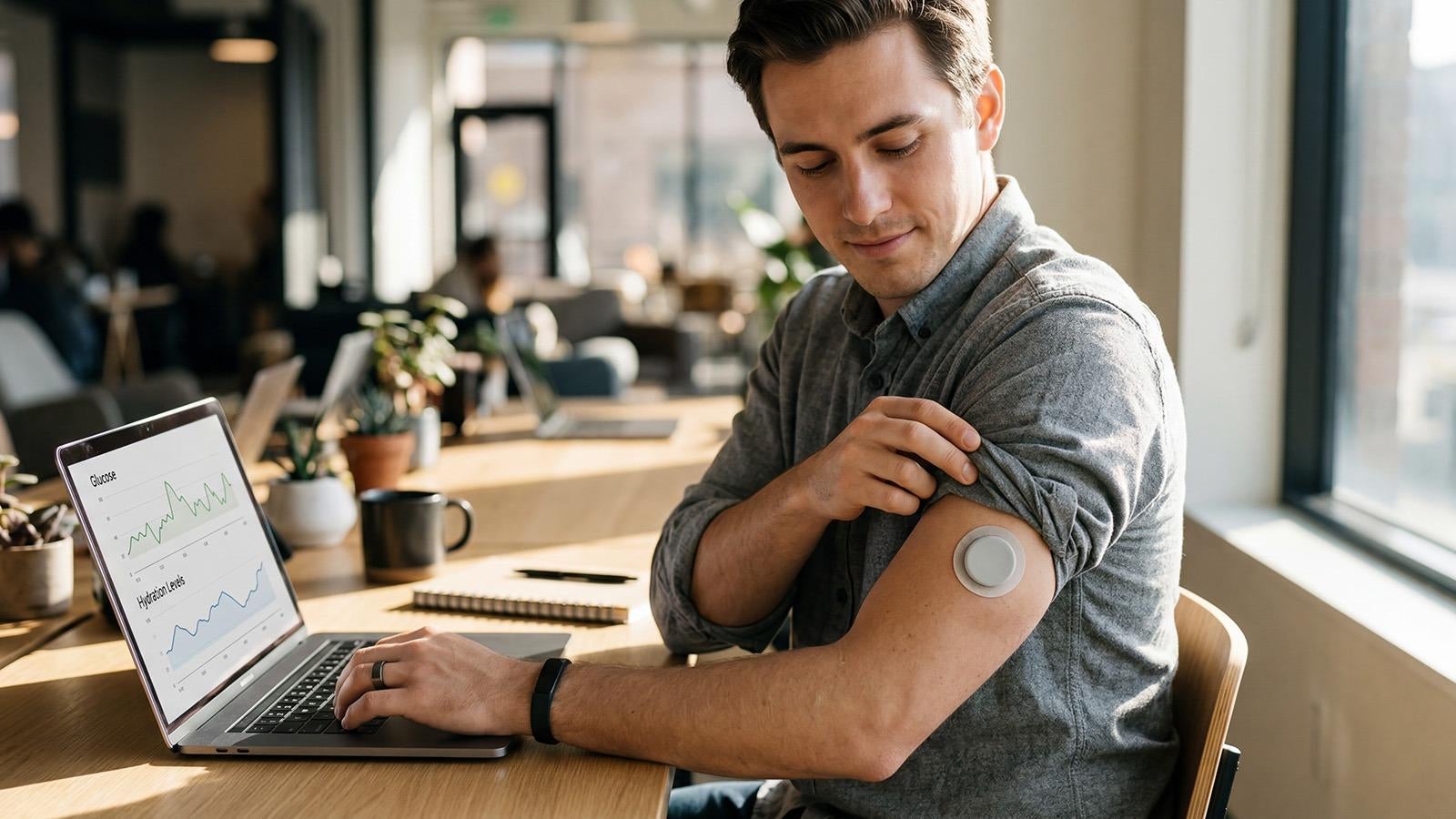
How consumer health habits and occasions are reshaping growth across consumer markets and healthcare.
The takeaways
- Consumers are regularly tracking and adjusting their health behaviours, creating new health occasions involving food, sleep, stress, weight, appearance, performance, and longevity.
- Consumers still want value, convenience, and clear information in the products they buy, and they are also showing interest in products wrapped in data, diagnostics, coaching, monitoring, subscriptions, and care.
- PwC’s proprietary product data shows where consumers say they are interested in buying next, helping companies identify which propositions to build, which partners to work with, and how to make health easier to choose.
Key findings
Follow a consumer through the day, and health starts to show up everywhere. Breakfast is shaped by protein and energy goals. A commute becomes a check on sleep, stress, or recovery. The supermarket trip includes scanning ingredients and selecting functional foods. The pharmacy visit may start with questions about rest, weight, or mood. A wearable device records the day, an app interprets it, and AI offers advice. The next recommendation may come from a clinician, coach, pharmacist, retailer, brand, or family member.
PwC’s Voice of the Consumer 2026 research, a survey of 21,808 consumers across 27 countries, shows how quickly these actions are becoming part of everyday life. Consumers told us they are buying for, tracking, and adjusting their health behaviours regularly. Health is becoming a less episodic and more continuous concern, less institution-led and more consumer-led. The pursuit of health is increasingly personalised, focused on services, and woven into daily routines.
During our interviews, executives in healthcare, pharma, retail, and consumer goods described the same shift. “The patient is no longer seeking all their information by going to the doctor,” says Jeppe Theisen, an executive at the Danish pharmaceutical company Novo Nordisk, “and we need to be where they are.” That means engaging with consumers on the goals that, according to our survey, they’re already pursuing: living longer, reducing stress, improving sleep, managing weight, pursuing personal growth, and feeling more confident in appearance.
The scale of the opportunity is significant. The global wellness economy reached US$6.8 trillion in 2024—equivalent to roughly one in every eight consumer dollars spent, using World Bank household consumption data as a broad benchmark. The Global Wellness Institute projects the number will grow to $9.8 trillion by 2029. Later in this article, we use consumers’ future purchase intentions to show where health goals may emerge next, which products and services consumers are considering, and how different sectors can respond.
New attitudes
When health becomes an occasion
Food and beverage companies and retailers have long shaped product portfolios through the prism of consumer “occasions.” Think of the breakfast routine, the mid-afternoon coffee, the after-school snack, the sports-day refreshment, the family dinner, and the midnight snack.
Now, as health, nutrition, and fitness culture is becoming more ubiquitous, those familiar occasions are being recast through specific health goals; for example, the breakfast routine now includes decisions involving energy and performance. “The next wave of consumer understanding is at what times of the day do you need to increase your protein intake,” says Elizabeth Horvath, CMO of Kerry Group, a food company, pointing specifically to innovations affecting the morning occasions. Companies are designing products and services for consumers who are more informed.
The same logic applies across food, sleep, stress, weight, appearance, athletic performance, and longevity. Consumers made purchases in an average of three or four categories of health and wellbeing products over the past year; 69% frequently engage in at least two health and nutrition habits; and 80% use an app or wearable for at least one health and wellness activity. These are the repeated, intentional moments when consumers try to improve their health.
A signal finding was that 40% of consumers say improving sleep is one of their top health goals, and only 56% rate their current sleep as good or excellent. However, just 32% frequently track their sleep and make efforts to improve it. That gap creates room for products and services including wearables, nutrition, supplements, smart environments, pharmaceuticals, and care. A consumer trying to improve sleep may need a supplement, a sleep monitor, stress reduction, coaching, pharmacy advice, or clinical support.
Health solutions
Where is demand forming next?
Our data shows that interest is already broadest in nutrition, supplements, and personal care products, where roughly four out of five consumers are either qualified buyers or interested but not yet qualified. That includes 57% who are already qualified buyers (meaning they have bought something similar or are very interested and would like to purchase) and a further 26% who show interest but need more information or are not yet ready to buy.
But the demand signal runs well beyond the ever-expanding wellness aisle. A few years ago, rising interest in physical and mental wellness might have shown up in products like yoga mats, athleisure wear, and vitamins. Now it is just as likely to show up in services wrapped around products: a ring that tracks sleep, an app that coaches exercise, or a watch that monitors heart rate and blood pressure. With better sensors, apps, and subscription models, products can turn into platforms for monitoring, guidance, and improvement. Our data shows strong consumer interest in health insights and diagnostics (63%), coaching and behaviour change (60%), and devices, equipment, and smart environments (54%).
Value and clarity
Growth will depend on making health easier to buy
Despite consumers’ evolving focus, they still care deeply about the basics. When consumers consider products or services to support their health goals, value for money is the leading attribute, selected by nearly three-quarters of respondents. Cost, ease of use, and clear information on what the product/service is and how it works all garner a similarly strong response, and personalisation or ability to tailor the product/service to their needs comes in at 58%. These results are broadly consistent across regions globally.
This is the conversion challenge. Consumers may be interested in a wide range of products and services, but interest will not automatically turn into adoption if health propositions make the prospect work too hard. Not every consumer wants to know their wattage on a 20-minute walk or decode the nutritional claims of an energy bar.
Nor is every consumer moment waiting to be “healthified.” Ivan Babić, General Manager for the Adriatics at the frozen food giant Nomad Foods, points to ice cream as a reminder that the nature of the occasion still matters. For consumers, he says, ice cream is an indulgence occasion, which makes conventional reformulation, such as reducing sugar, hard to sell. In that context, health-oriented innovation works better when it respects the occasion, through naturally lighter formats such as sorbet, or through packaging innovation and portion control, rather than through changing the core proposition.
AI adoption
The first health move increasingly is a digital one
As the front end of health evolves, the system behind it is becoming more digital, connected, and data-rich. The familiar habit of consulting “Dr Google” has become more powerful. Consumers now have AI, wearables, food scanners, and health apps feeding them answers before they enter the healthcare system with any concerns. Eighty percent use apps or wearables for at least one health and wellness activity. Roughly a third of respondents in the US, UK, and Germany use AI when they first have a health or wellness question or concern. This number rises to 61% and higher in Asia, 68% in Latin America, and 75% in the Middle East.
Among younger generations, general comfort with using AI tools to perform at least one health and wellness task is at 86%, compared with 62% among older generations. Unsurprisingly, younger consumers are also more comfortable with some of the most commercially relevant AI use cases, including meal planning, fitness programming, and health monitoring.
AI is powerful at the start of the journey, according to Marcin Fojudzki, a member of the management board of Benefit Systems—a company operating in six European markets, best known for its corporate sports and fitness subscriptions. It’s well suited “for the research, for the early diagnostics, and for expanding options.” He points out, however, that “when consumers act, the most important factor remains the proven expertise from specialists in fields such as health, diet, and physical activity, followed by ‘social proof’ from friends, family members, and others whose views are valued by the consumer.”
AI adoption is likely to evolve rapidly, but health decisions still depend on having a trusted human in the loop. Our research shows that only 18% of consumers consider AI tools or conversational AI to be one of their top five influences on health and wellbeing actions. Traditional sources carry more weight: 57% cite healthcare professionals, 52% their own curiosity, and 50% friends, family, or coworkers.
The same trend appears in data sharing. Digital tools need to sit inside a trusted system. Consumers are most comfortable sharing detailed health data for personalisation with the pharmacy they use (36% of those surveyed), followed by insurance companies (30%), and fitness and training companies (27%). Retail and consumer packaged goods (CPG) players came in at roughly 20%.
Entry points
GLP-1s show what can happen next
GLP-1 treatments for weight management are a good example of how a first health signal can become a wider pathway of behaviour, support, and spending. Consumer interest is already visible in the way the category is being pulled through the healthcare system. Patients are increasingly asking doctors for treatment or even a specific brand, says Theisen of Novo Nordisk, which manufactures GLP-1 treatments including Ozempic and Wegovy. But the surrounding system has not caught up. “In obesity care, there are still few clear, effective pathways to obtaining a prescription for GLP-1s,” he says, “so patients are finding them themselves through new channels.”
Our research shows why those pathways matter. GLP-1 users are more engaged health managers. They are more likely than non-users to monitor their intake of fibre, protein, and calories, and to practise intermittent fasting or time-restricted eating. GLP-1 users also plan to increase their scrutiny of nutrition and food labels; exercise more; and increase their overall spending on health and wellness, personal style and appearance, and food.
Five archetypes
PwC’s Voice of the Consumer 2026 research programme offers another way to look at the consumerisation of health. We segmented global consumers into five proprietary archetypes based on their interest in future-oriented wellness products and services, then linked those interests to their behaviours, attitudes, and influences.
Data-driven optimisers (20% of respondents) want to measure, track, and improve their health through wearables, diagnostics, personalised coaching, and expert-backed solutions.
Value-seeking optimisers (17%) engage when the return is clear, whether through incentives, insurance, financial programmes, or measurable health outcomes.
Social wellness seekers (14%) view wellness as a shared journey, shaped by community, culture, belonging, and experiences.
Holistic harmonisers (13%) design wellness into daily life through sensory tools, smart environments, aesthetics, balance, and emotional wellbeing.
Low-engagement consumers (35%) skew older; are more cautious about emerging wellness trends and technologies; and respond best to simplicity, affordability, and trust.
The first four groups tend to be made up of younger generations, be more financially secure, and show higher engagement with health technology. They are also more willing to share health data for personalisation, and express greater concern about external factors affecting their health and wellness.
The archetypes help show why health and wellness can’t be treated as one market. The archetypes’ value is practical, helping businesses see where growth is likely to come from. For some companies, that may mean finding new customers for the products they already sell. For others, it may mean using a clearer understanding of their existing customers to develop, market, and sell new products and services, or forming new partnerships or ecosystems around emerging wellness behaviours.
Take a global fitness technology company as an example. It sells smartwatches, sensors, and fitness devices. Viewed through the archetypes lens, its core customer is likely the data-driven optimiser, someone who wants to measure, track, compare, and improve. But our data shows this group is also highly interested in nutrition and supplements, health insights and diagnostics, and coaching and behaviour-change programmes. That points to one growth route, expanding around existing customers. The company does not need to sell supplements. It could use its data to support adaptive nutrition guidance, hydration prompts, supplement recommendations, coaching, and recovery services through partners.
The archetypes also show where a company like this could stretch to new consumers. Holistic harmonisers may not be performance athletes, but they may still respond to sleep-related, stress-related, and recovery-related tools that fit into a wider daily wellness routine. Value-seeking optimisers may care less about the elegance of the data and more about the return, such as lower premiums, employer benefits, rewards, or proof that the product helps achieve health outcomes and pays for itself.
How to win
What does this mean for your sector?
We asked consumers what products and services they would be interested in buying in the future to meet their specific health goals. This dataset gives businesses a forward-looking view of growth across the consumer health industry. It also helps translate the opportunity by sector: where CPG companies, retailers, health providers, and pharmaceutical companies can credibly play, partner, and compete.
Consumer markets (CPG)
Food and beverage. Food and beverage companies are already in the health occasions market. Consumers have made vitamins, minerals, and supplements the leading health and wellbeing purchase in the past 12 months. Specialty health foods and beverages are also a major discretionary purchase. Looking ahead, consumers expect to increase their consumption of fresh produce and vitamins or supplements, while reducing processed or high-sugar foods and alcoholic beverages. Gen Z consumers are especially likely to say they will increase consumption of vitamins and supplements, along with dairy and meat alternatives. GLP-1 adoption adds another pressure point, increasing demand for smaller portions, higher-protein formats, and products that support nutrition, satiety, and muscle preservation.
This points to an evolution from better-for-you claims towards more specific health outcomes in areas such as energy, sleep, mood, skin, gut health, and metabolism. But function alone is not enough. Aldo Uva, CEO of Incredo, a food-tech company focused on sugar reduction, says food companies need to invest in the innovation that preserves taste, texture, and mouth feel. “The food should taste great,” he says. “Otherwise, consumers will always reject it.”
What’s more, as claims become more specific, the proposition can lean away from products and towards services. Products can be wrapped in data, guidance, subscriptions, and personalised prompts to help consumers achieve health outcomes in a convenient and budget-friendly way.
No-regret moves
- Build around occasions such as morning and midday energy dips, recovery, and sleep, with products designed for specific goals such as satiety, mood, longevity, and metabolic support.
- Present products with simple guidance, prompts, or subscriptions that help consumers understand what to consume when, and how the product supports their goals.
Household and personal care. For household and personal care companies, the opportunity sits where health, environment, beauty, and self-confidence meet. Consumers show meaningful interest in products, and increasingly service-led or support products, that shape the physical environment: lifestyle, environment, and sensory tools have a combined interest level of 48%, while devices, equipment, and smart environments reach 55%.
PwC’s healthy living research points in the same direction. We found strong consumer interest in health-friendly home design and architecture, access to gym/fitness opportunities and healthy food, and at-home tracking of health and body data.
That supports the opportunity for household and personal care players to move beyond products into environments that support sleep, recovery, prevention, and daily wellbeing. Subscriptions and personalised routines are already familiar in categories such as skincare, hair care, weight management, and supplements. Tech and data now make those services more sophisticated through tracking, feedback, prompts, diagnostics, or personalised recommendations.
No-regret moves
- Treat the home, bathroom cabinet, and bedroom as health environments, especially with respect to sleep, recovery, appearance, and daily wellbeing.
- Use diagnostics, AI analysis of skin and scalp, or sleep environment data to give consumers clear, practical recommendations without adding cost or complexity.
Omnichannel retail. Retail’s opportunity is to become the place where consumers navigate health choices. Retailers already meet consumers in grocery, pharmacy, beauty, personal care, wellness, electronics, digital channels, and loyalty programmes. That gives them a practical advantage through cross-category visibility, frequent customer interactions, and data that can help consumers make sense of competing health messages and act to pursue their multiple goals.
Consumer interest extends across retail markets: 82% of survey respondents identified at least one product they intended to purchase in nutrition, supplements, and personal care; 63% in health insights and diagnostics; 60% in coaching, programmes, and behaviour change; 55% in devices, equipment, and smart environments; and 48% in lifestyle, environment, and sensory tools. That could mean goal-based merchandising, pharmacy-led advice, in-store diagnostics, loyalty-linked health journeys, sleep and stress aisles, GLP-1 companion baskets, or personalised recommendations that connect food, supplements, devices, and services.
The constraint is permission. Consumers may welcome guidance, but they are selective about who they trust with health data. They’re more comfortable sharing detailed health data with their pharmacy than with supermarkets or everyday product companies, suggesting that pharmacy-led retail, where jurisdictionally permitted, may have a stronger role to play in guided health services.
“We believe that in the near future, the pharmacist will be the key differentiator across all channels—including physical stores, e commerce, and artificial intelligence,” says Ionel Popescu, CFO of the Romanian arm of Dr. Max, a European pharmacy network. “While digital tools can support the customer journey, the pharmacist remains the most trusted touchpoint, helping consumers navigate choices and make safe, informed health decisions.”
No-regret moves
- Organise health in terms of goals rather than categories, connecting food, supplements, devices, diagnostics, pharmacy advice, and services to needs related to sleep, stress, weight, and energy.
- Build trust using pharmacy relationships, expert guidance, and clear value exchange before asking consumers to share more health data.
Health industries
Health providers. For providers such as hospitals, health systems, and primary care networks, consumer health occasions are a route to early engagement. The sector is already moving from reactive care towards more proactive, decentralised, and personalised models. AI, data, and digital tools are increasingly embedded into care pathways rather than added at the edge. PwC’s Global Health Report frames this as a shift towards prevention, prediction, decentralisation, and measurable outcomes.
The Voice of the Consumer data shows that providers remain central to trust: 57% of consumers say healthcare professionals’ recommendations are among the strongest influences on actions they take for health and wellbeing. But healthcare professionals are now part of a wider decision network. Among our respondents, 52% cite their own curiosity; 50% cite friends, family, or coworkers; and 27% cite data from apps and wearables as influences. A staggering 80% of respondents use an app or wearable for at least one health and wellness activity, and the number surges to over 90% in the United Arab Emirates and Saudi Arabia.
The opportunity for providers is to turn that wider decision network into earlier, better-coordinated care. PwC’s analysis forecasts $1 trillion of annual healthcare spending in the US alone to shift over the next decade away from fragmented, infrastructure-heavy models and towards empowered “super consumers” and digital-first, proactive, personalised care. Concerns involving sleep, stress, weight, adherence, prevention, remote monitoring, and digital triage all create moments to engage before formal care.
Pharmacies can be part of that earlier care network. Marie-Claude Vézina, Chief Network Officer of Metro Pharmacy, a Canadian pharmacy operator, says the model is moving from “dispensing medication” to becoming “a trusted health hub that is embedded in the community.” That means offering “solutions, not just products” and extending care beyond the four walls of the pharmacy through digital delivery, counselling, and asynchronous support.
At-home care is another route into this shift. Past PwC research found that older adults consistently prefer to remain in their homes and communities, and that the ability to age in place depends on investment in assistive technologies, caregiver support, and reliable referral pathways. For providers, that creates an intergenerational health occasion: the “carer shopper” choosing monitoring tools, digital access, or care navigation for a parent or relative. It may also help convert more sceptical consumers whose first adoption of digital health is driven by family need rather than personal enthusiasm.
No-regret moves
- Use concerns related to sleep, stress, weight, and digital triage as earlier points of engagement before formal care.
- Design for the “carer shopper,” e.g. family members choosing monitoring, navigation, and at-home support for older relatives.
Pharmaceuticals and life sciences. In life sciences and pharmaceuticals, the consumer health shift is the move from a product-centred model to a pathway-centred model, in which medication, monitoring, education, adherence, and support are designed together. GLP-1s are the clearest example, but the lesson is broader. As discussed earlier, they show how a therapy can create a wider set of health occasions around nutrition, protein intake, muscle preservation, coaching, side-effect management, adherence, monitoring, and long-term behaviour change. That same logic can apply across therapeutic areas where outcomes depend on what happens before, during, and after treatment.
The implication extends across therapeutic areas. As consumers take a more active role in how they manage health, pharma companies will need stronger capabilities in patient engagement, digital support, behavioural coaching, data partnerships, and real-world evidence. Christophe Cosio, general manager of Amgen Netherlands, part of the global biotechnology company Amgen, says the goal is to develop “not only…a drug, but everything around the drug,” including monitoring, delivery, and support outside the hospital. The commercial opportunity is to improve the outcomes of the therapy, helping people start, adapt, and manage the broader behaviours that influence results.
The strategic question is how pharma companies should design for the full patient pathway, including awareness, diagnosis, lifestyle support, and measurable outcomes. That requires capabilities beyond the traditional commercial model, including partnerships involving providers, pharmacies, diagnostics, digital health, data platforms, and consumer health players. The product still matters. But patient pathways increasingly determine whether people recognise symptoms, enter care, start treatment, stay on therapy, and achieve better outcomes.
No-regret moves
- Design for the full patient pathway, from awareness and diagnosis to initiation, adherence, persistence, lifestyle support, and outcomes tracking.
- Build partnerships involving providers, pharmacies, diagnostics, digital health, data platforms, and consumer health players to support what happens along with the therapy.
The voice of the consumer is clear. People are managing their health more often, in more places, with more tools and with higher expectations. They are asking businesses to help them make everyday health decisions. The companies that rise to the occasion will be those that earn the right to support those decisions.
Methodology and analysis
In February and March 2026, PwC surveyed 21,808 consumers across 27 countries and territories: Australia; Brazil; China; Egypt; France; Germany; Hong Kong, SAR; Hungary; India; Indonesia; Ireland; Malaysia; Mexico; the Netherlands; the Philippines; Poland; Qatar; Romania; Saudi Arabia; Singapore; Spain; Thailand; the United Arab Emirates; Ukraine; the United Kingdom; the United States; and Vietnam. The respondents were at least 18 years old and were asked about a range of topics relating to consumer health and wellness, including their behaviours and habits, tech/AI engagement, GLP-1 usage, health goals, and wellness-related products.
Interviews with industry executives took place in April and May 2026.
PwC Research, PwC’s global centre of excellence for market research and insight, conducted this survey.
The authors thank Libby Boswell, Wayne Borchardt, Andrea Plumbley, and Jakob von Baeyer for their contributions to this article.
We performed a cluster analysis to segment global consumers into five proprietary archetypes based on their interest in future-oriented wellness products and services. We then analysed each segment across a broader set of survey questions (e.g. behaviours, attitudes, motivations, and influences) to build a more complete picture of who these consumers are, how they engage with wellness today, and what drives their decisions.
The authors thank the following colleagues for their contributions to this article: Ilse Kennes, Director, Health Industries, PwC Belgium; Dr. Raees Lunat, Clinical Lead, Strategy& UK; Iryna Scheurlen, Director, Strategy& Germany; Jacqueline Windsor, Strategy&, Partner, PwC United Kingdom.
Related content

The future of care
The healthcare industry is evolving into a dynamic ecosystem. Patients, practitioners, and industry players all stand to benefit.
10 min read

How connected cars can enable healthcare
Connecting car tech and data to healthcare systems can turn your driver’s seat into your next wearable.
8 min read
Get in touch

Anthony Bruce
Global Health Industries Leader
PwC United Kingdom

Sabine Durand-Hayes
Global Consumer Markets Leader
PwC France

Harald Dutzler
Global Consumer Goods Leader, Partner
Strategy& Austria

Paul Morton
Global Consumer Markets Advisory Leader
PwC United Kingdom
This page features AI-generated imagery.
