Turn insight into action
We help you solve the problems that matter most so you can act faster and move further.
What would you like to explore?
Driving the automotive industry into the future
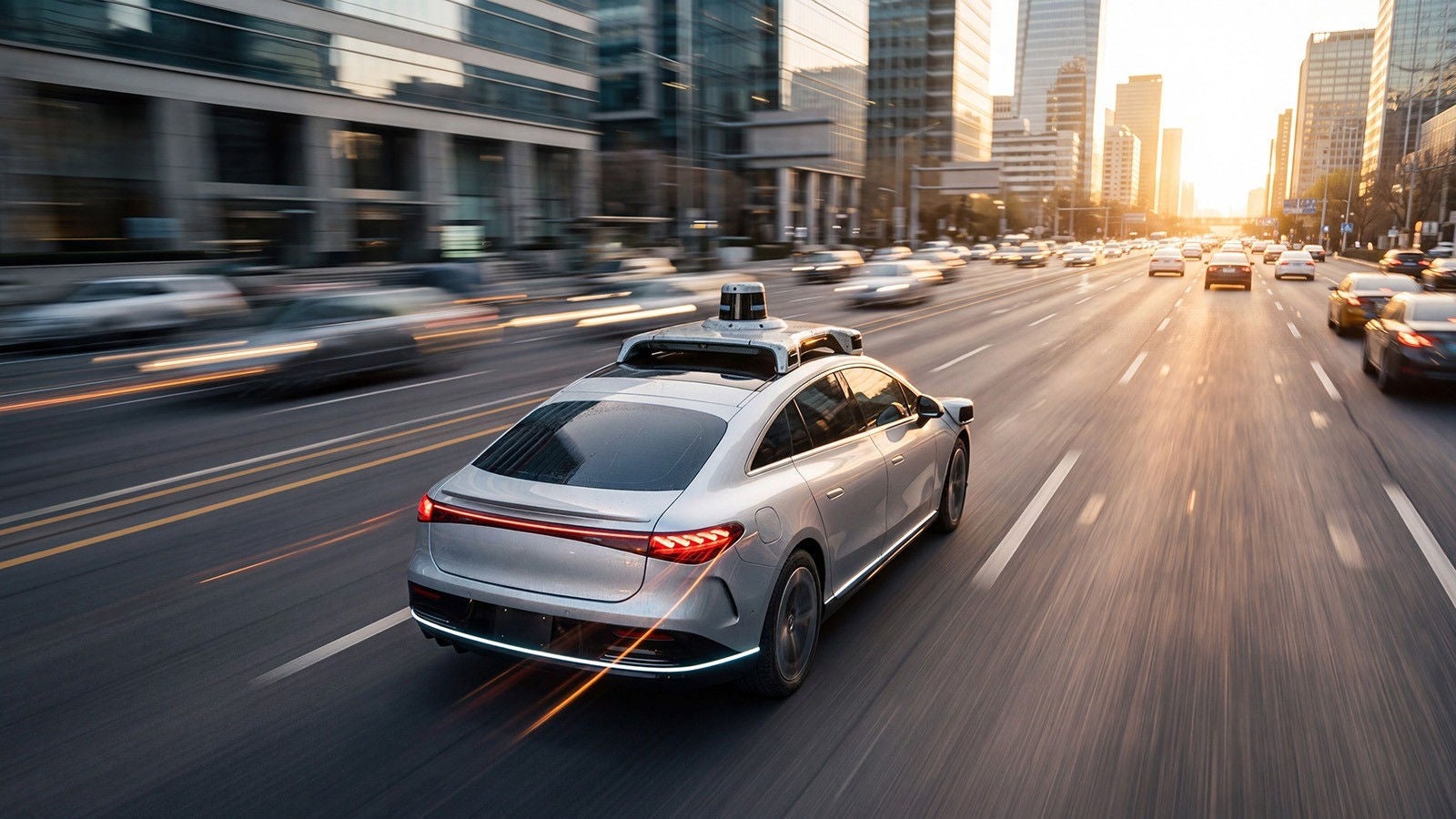
PwC’s survey highlights the capabilities and strategies automotive companies must develop to gain a distinct advantage in the years ahead.
The takeaways
- The automotive industry’s competitive set extends beyond traditional automakers. Some 46% of executives expect significant competition from new entrants in adjacent industries.
- Automotive executives expect 33% of revenue to come from new customers in five years, while products, channels, and growth markets are also changing markedly.
- Despite strong confidence among automotive executives, critical gaps remain in AI, software, cultural change, and reskilling. Automakers will need to become ‘future fit’ to effectively compete.
The challenge
“In a competitive economy,” the economist Joseph Schumpeter wrote in 1942, “new combinations mean the competitive elimination of the old.”
Industries live in constant tension as established businesses wind down and new forms emerge. More than eight decades later, the automotive industry is living through a phase of what Schumpeter dubbed “creative destruction.” This vital US$2.6 trillion global industry is experiencing a structural break in the logic of how value is created. And as these significant changes arrive all at once, it’s clear that not all players are ready.
PwC’s research, based on a survey of 720 automotive executives at original equipment manufacturers (OEMs) and Tier 1 suppliers in 33 countries conducted in March and April 2026, surfaces the existential challenges the industry faces today and in the coming five years, and points to the mindsets, capabilities, and strategies that will make players fit for the future. The largest capability gaps in the industry exist in the fields respondents themselves identify as most critical: artificial intelligence and software engineering.
Our research raises three questions that incumbents facing structural disruption know all too well:
- Why are we, as a well-run company with strong capital discipline and a proud history, at risk of being outrun by less experienced competitors?
- What capabilities distinguish the firms that make it through such transitions from those that do not?
- How do we manage the delicate but necessary act of building the next business without prematurely destroying the one that funds us today?
When we group the respondents by their responses in three core areas—the technologies, capabilities, and value pools they’re prioritising; the strategic and structural moves they expect to make; and the places along the value chain they plan to invest in—three distinct archetypes emerge. Each archetype has a characteristic strength, a characteristic vulnerability, and a particular answer to the three questions above.
Industry transformation
Four simultaneous shifts
In the early 20th century, Henry Ford’s moving assembly line reinvented the very idea of manufacturing complex vehicles. In the postwar decades, Toyota’s production system developed the disciplines of quality and efficiency. In the 1990s and 2000s, globalisation redrew the map of where value was created, while lean manufacturing rationalised the process. These transformations were architecturally stable. They changed how value was created but not where the value flowed. Cars were still cars, fuelled almost exclusively by gasoline. Value still flowed from a mechanical product that was assembled at scale, sold through dealers, and serviced through networks.
Today’s transformation, by contrast, is architecturally unstable. The product itself, the way the customer pays for it, and the competitors that offer alternatives are all changing at the same time. In their study of technological transitions, scholars Rebecca Henderson and Kim Clark distinguished between two kinds of innovation. Component innovation improves individual parts of a product while leaving their relationships intact; think of a better engine, or a better transmission. Architectural innovation, by contrast, keeps the components largely familiar but changes the way they’re connected. Established firms regularly struggle with architectural innovation because their organisations are structured around the old architecture.
PwC’s survey identifies four parallel shifts that, to different degrees, demand architectural innovation and spur reinvention.
Are you prepared?
The incumbent’s dilemma
Many well-run companies with long and proud histories are being outrun by less experienced competitors.
Our research points to a paradox that helps explain why. Companies have a strong self-perception but seem weak where it matters most. Most automotive executives say their companies are well-run:
- 76% of respondents agree that management allocates capital to the highest-return initiatives.
- 73% say decision-making is agile and data-informed.
- 64% believe the organisational structure supports quick market adaptation.
Harvard Business School professor Clayton Christensen’s The Innovator’s Dilemma, first published in 1997, showed that companies that are demonstrably well managed tend to fall behind on capabilities they know they need for the future, for entirely rational reasons. They allocate capital to the highest-return opportunities visible today, listen to their most profitable customers, and invest in sustaining improvements to existing products.
Given the four simultaneous shifts we’ve outlined, what generates a positive return today is not likely to generate the same level of return in five years. And our survey shows that the largest capability gaps, the widest deltas between what leaders see as critical for the future and how developed those capabilities are today, sit in precisely the fields respondents identify as most strategically decisive over the next five years. Some 51% of respondents rank AI as one of the top three technologies for achieving strategic goals over the next five years, making it the most frequently cited technology. It is also identified, along with software engineering and flexible and resilient supply chains, as an important capability that is underdeveloped.
The instinct is to fix the gap by working harder on the same disciplines that produced the self-assessment: through better capital allocation processes, better talent acquisition, and faster decision cycles. And the very mechanisms that make companies well-run (such as rigorous investment cases, portfolio prioritisation, and customer-driven planning) sort disruptive opportunities out of the investment pipeline, because they cannot yet meet the return threshold that the core business sets.
Indeed, when the respondents who selected manufacturing and operations as a value chain investment area were asked what primarily drives those investments, 73% pointed to productivity and efficiency. That was the highest driver by a wide margin, and an indication that these investments are focused on improving what they already do.
PwC’s survey shows that technology companies are already expected to displace industrial manufacturers as the most important ecosystem collaborators over the next five years. And tomorrow’s collaborators are likely to evolve into competitors. Yet the capabilities that enable an automotive company to excel at building vehicles don’t position it to compete with a company whose native discipline is shipping software. Automotive quality has traditionally been produced through long validation cycles, extensive supplier audits, and a ‘release when perfect’ posture that treats every product handover as a near-terminal decision. Software quality comes from short cycles, continuous integration, telemetry from the field, and a willingness to release a version that is deliberately incomplete—to be improved by the next version, delivered over the air, weeks or days later.
When respondents were asked about the largest inhibitors to their ability to create, deliver, and capture value, they ranked talent shortages second overall, at 51%, and gaps in current workforce skills fifth, at 45%. In our experience, software engineering, AI development, and digital platform management are simultaneously the fields of greatest strategic importance and the fields of greatest workforce shortfall.
New disciplines
Three dynamic capabilities
If the automotive incumbent can’t resolve its dilemma by working harder at the same disciplines, a different set of disciplines must be driving success in the companies that are pulling ahead. What are they?
University of California professor David J. Teece has spent nearly three decades answering that question. Instead of treating competitive advantage as a function of what a firm owns, Teece focused on what a firm can do repeatedly. He identified three dynamic capabilities that enable the business to reconfigure resources when the environment changes: sensing, seizing, and transforming.
Regional divergence
Variations in five key markets
When respondents in different markets were asked to name their top competitive threats, the answers diverged in a way reflecting not just different market realities but different sensing capabilities. We had sufficiently large samples to analyse five markets on a country basis: China, Germany, India, Japan, and the US. Of this group, Chinese respondents are most likely to name competitor actions (41%) as a top threat, and are most likely to identify new entrants from adjacent industries (52%) as a source of competition. This is a pattern consistent with a market in which the competitive frame has already visibly widened beyond traditional automotive incumbents. Japanese respondents name supply chain dynamics (45%) as their top threat, reflecting a well-honed sensitivity to the network vulnerabilities that come with global integration. US respondents, notably, give the lowest weight globally to new entrants from adjacent industries as a source of competition (32%) and the second-lowest weight to competitor actions as a threat (22%), and instead name tariffs (42%) as their top threat. Companies that have correctly sensed the widening of the competitor set will invest differently, partner differently, and structure themselves differently from companies that have not.
The survey provides several indicators of seizing intent globally: pursuing ecosystem participation (64%), shifting internal resource allocation significantly (63%), nearshoring or regionalising operations (60%), and expanding geographically (55%). None of the large markets in the survey demonstrates disciplined seizing more consistently than Japan. Japanese automotive executives report the highest capital allocation scores globally; 83% agree that capital is directed to highest-return initiatives. They also place the highest priority on ecosystem participation (74%), and one of the strongest emphases on workforce upskilling and reskilling as a strategic move (75%).
The most visible indicator of transforming intent in our survey is the planned uptake of advanced technologies across the value chain. As noted above, the median share of global respondents using advanced technologies to a large or very large extent in each activity of the value chain will rise from 47% today to 72% over the next five years. That’s an increase of 25 percentage points in five years, spread across manufacturing, R&D, supply chain, sales, after-sales, and corporate functions.
The organisation that senses well and seizes well can still find its transforming efforts countered by the friction of its own inherited structure. Fully 64% of respondents agree that their organisational structure supports quick market adaptation, but a third of respondents also identify strategic clarity and misalignment across units (35%), inefficient internal processes (37%), and legacy systems (36%) as significant inhibitors of value creation.
Capability is universal; its price is not
Sensing, seizing, and transforming describe what a company must be able to do. But they do not describe what it costs to carry out these efforts. In the five large markets we focused on, the same strategic moves carry different costs, come at different clock speeds, and have different feasibility thresholds. That variation has little to do with management capability and everything to do with structural and geographic conditions. Leaders who treat future fitness as a purely internal capability question will systematically underestimate the effort it demands and will misread competitors who operate under materially different constraints.
In one market, for example, winding down a legacy platform may be an exercise in capital and communications, while in another it might require multiyear negotiations with statutory codetermination bodies. In a market with deep venture and private capital resources, funding an investment whose return is not yet visible is a board decision. By contrast, when anchor shareholders, foundations, and state holdings set the risk appetite, the conversations around investments are more challenging. And in every market, energy prices determine where battery and manufacturing investment can be economically sited, irrespective of where the engineering capability sits.
Future-fit companies
What makes some automotive companies ready for what’s next?
As part of our research, we identified the top 20% of companies that we think are fit for the future based on their answers to questions that highlighted four key variables: strategic agility, innovation, speed-to-market, and finance capability. The differences between the future-fit companies and their peers are particularly notable when it comes to sensing, seizing, and transforming.
When asked about the capabilities important for financial performance over the coming five years, future-fit companies generally show higher scores, indicating that they are better at sensing the competitive marketplace.
The ability to seize opportunities rests on the degree to which capabilities vital to strategic priorities are developed. Here, too, future-fit companies are ahead of their peers. Some 71% of future-fit companies say software engineering and AI capabilities are developed to a large or very large extent, compared with only 45% of all other companies; 75% of future-fit companies say partnership development and management are developed to a large or very large extent, compared with 56% of all other companies. Future-fit companies are also significantly more likely than other companies to seize growth efforts such as expanding into new customer segments (86%, compared with 71%), expanding or improving digital sales channels (73%, compared with 54%), and, especially, expanding offerings beyond automotive (72%, compared with 45%).
For companies to be able to embark on transformation, they need a strong cultural foundation and tolerance for risk. Again, future-fit companies outperform their peers. Fully 80% of future-fit companies say they have a high tolerance for strategic risk-taking, compared with only 49% of other companies; 86% say their organisational structure supports quick market adaptation, compared with 58% of all other companies; and 90% say their decision-making is agile and data-informed, compared with 69% of all other companies.
Key opportunities
Building for the next wave of growth
In her 2013 book The End of Competitive Advantage, Rita Gunther McGrath of Columbia Business School argued that competitive advantages, the proverbial moats around businesses, are increasingly transient. Formerly durable advantages mature and decline in the face of new technology. Companies that endure continuously build new advantages and exploit them intensely while they last. They also (and this is the part where most incumbents underinvest) actively wind them down as they mature, freeing up the resources and attention needed to build the next advantage. McGrath called this discipline healthy disengagement. Healthy disengagement means treating a still-productive business as a runway; its function is to fund the transition to what comes next.
PwC’s survey identifies four clear areas of emerging advantage where companies need to build capabilities.
Transition strategy
Winding down and rebalancing
Traditional ICE vehicles and components generate a disproportionate share of the industry’s current cash flow. That cash flow funds the reinvention agenda, including investments in electrification, software, and digital platforms. But the temptation, particularly in markets where the ICE transition is proceeding more slowly and where near-term political and tariff dynamics reward keeping ICE lines running, is to treat this runway as a destination.
US respondents, for example, expect ICE vehicles to remain the majority of production volume (51%) even five years from now. That’s the slowest transition among the large surveyed markets. US respondents cite tariffs as their top threat (42%), significantly above the global average, and they rate nearshoring and regionalising operations as one of their top strategic responses (67%, above the global 60%). US respondents also give the lowest weight globally to adjacent-industry competitors (32%). The picture that emerges is of an industry that is well-positioned to manage the ICE runway. But it’s under pressure—from tariffs, from supply chain challenges, from the pace of adjacent competitors elsewhere—to make sure the runway is a route to a destination, not the destination itself.
In practice, concrete components of healthy disengagement include:
- Transparent capital allocation rules that force declining businesses to compete for reinvestment on the same terms as emerging ones
- Explicit timelines and decision gates for retiring product lines, tooling, and platforms
- Workforce transition plans that treat reskilling and redeployment as strategic disciplines rather than HR consequences
- An executive-level owner for the wind-down, distinct from the owner of the new-advantage build
The last item in the list is perhaps most important. In most automotive companies today, the build has a leader, whereas the wind-down is left to attrition, depreciation schedules, and the general manager of the affected division. To truly succeed, companies must run building up and winding down in parallel as twin strategic programmes from the outset, resourced and governed with the same seriousness as the annual plan itself. Rebalancing that asymmetry is where the strategic architecture of the future-fit automotive company will differ most visibly from the strategic architecture of the current one.
Three archetypes for auto companies
Where do you stand?
The survey data provides automotive leaders with an unusually clear view of their position. The respondents, whether they are OEMs or suppliers, are grouped by the pattern of their responses to questions on the technologies, capabilities, and value pools they are prioritising; the strategic and structural moves they expect to make; and where along the value chain they plan on investing. Three distinct archetypes emerge. Each has a characteristic strength, a characteristic vulnerability, and characteristic answers to the three theoretical questions we have posed (Why are we at risk of being outrun by less experienced competitors? What capabilities distinguish the firms that make it through such transitions? And how do we build up the new business while not prematurely destroying the one that funds us today?). The value of the framework is not that it slots each company neatly into a single box. It names the dominant strategic posture and, from there, the dominant associated risk. All three archetypes will appear in each of the markets we studied.
We should note that the future archetypes are positions, not destinies. In addition, the archetypes are diagnostic, not prescriptive. There is no straightforward trajectory from industrialist to digitiser to diversifier. Companies move in different directions, at different speeds, from different starting positions. A company that recognises itself in the digitiser archetype doesn’t need to reposition itself as a diversifier; it needs to address the specific transforming shortfall that defines the digitiser risk. A company that recognises itself as a diversifier doesn’t need to shrink its build ambition; it needs to develop a matching disengagement discipline.
For each of the three future archetypes, the ability to participate in ecosystems will be a vital capability. Over the coming five years, the boundaries between the automotive industry and the broader mobility ecosystem, between vehicle and platform, and between OEMs and technology companies, will continue to erode. The ability to participate in ecosystems will become more central to the operating model itself. In our framework, ecosystem participation acts as a turbo gear for sensing, seizing, and transforming. As capital, talent, and innovations flow through networks of relationships, companies that navigate ecosystems can access capabilities and resources that they won’t have to build and maintain on their own. Organisations that can operate as if they are native to the ecosystems around them will have an edge on their competitors—whatever strategic path they pursue.
Your next moves
Setting the reinvention agenda
The archetypes are valuable precisely because they offer a strategic lens with which to look at the broader agenda. Today, most C-suite agendas in the industry are organised around initiatives—an EV programme, a software platform, a manufacturing footprint review—rather than around the underlying structural questions those initiatives are meant to answer. But initiatives without a structural agenda leave the deeper reinvention questions unanswered even when each individual initiative is well executed. As companies look towards 2030 and beyond, several key priorities stand out.
Five imperatives for the automotive C-suite
- Reframe the strategic question from sector to domain. The C-suite question that follows from our survey is not how do we win in the automotive industry as it exists? But rather: what do we choose to become inside the broad Move domain? Energy providers, technology platforms, urban infrastructure systems, financial services companies, and mobility operators are all now active participants. And each of them makes choices about how humans and goods move in ways that intersect with, and increasingly compete with, the choices automotive incumbents make. Companies that continue to define themselves as vehicle manufacturers will find the industry moves out from under them.
- Become a more active participant in ecosystems. Ecosystem participation is a strategic mode of sensing. At 64%, ecosystem participation was the most frequently cited strategic move. Being embedded in an ecosystem of technology partners, energy providers, and mobility platforms is the fastest way to receive the signals that the industry perimeter is shifting.
- Shift capital allocation logic from returns to options. As long as investment decisions are calibrated primarily to the hurdle rates of the current core business, disruptive alternatives will keep being sorted out of the pipeline. Future-fit companies do not abandon capital discipline. They add a second lens—strategic options—that funds specific bets whose ROI is not yet visible but that hold the potential to transform the business.
- Think more like a technology company. Though the industry has spent considerable attention on the technology shift (batteries, software stacks, data platforms), it has spent less on the mindset and cultural shift that makes the technology usable at competitive speed. Automotive companies must shift from linear, step-by-step governance to an agile approach, evolve the mindset from automotive engineering to the development of consumer electronics, and look beyond the product launch to managing the full product life cycle.
- Price your own location. Leaders must be realistic about the cost implications and structural conditions of the markets in which they operate. When considering options, they must ask themselves which intended strategic moves are likely to be structurally difficult to execute in their home location. Based on that assessment, they must decide whether to relocate, engage politically to try to change the environment, or forgo the investment.
As automotive companies look to the future, they must keep one final consideration front of mind. It’s not just that new skills and technologies are needed to win the race for 2030 and beyond. Companies that seek to thrive in the evolving environment must undergo an organisational and cultural shift. Our survey results show that being fit for the future isn’t just about exercising the muscles of production, efficiency, hardware, and software. Rather, it’s about developing the mindset and the organisational and governance structures that support innovation and agility. It’s time to start training.
PwC’s Global Automotive Sector Outlook 2026 gathered responses from 720 senior executives—all director‑level or above—from publicly listed and private automotive OEMs and Tier 1 suppliers across North America, Europe, Asia, and the Middle East. Fieldwork was conducted in March and April 2026. For the purposes of our analysis, where we received more than one respondent from the same company, we weighted the respondents from that company such that the total weight of the company equals one response. All results were calculated using weighted responses.
The study provides geographically diverse coverage with executive respondents from 33 countries, and sufficient sample sizes to support analysis in China, Germany, India, Japan, and the United States. The analysis is also supported in the following regions: East Asia, Southeast Asia, Western Europe, and North America.
Percentages shown in charts may not add up to 100% due to rounding, multi‑select response formats, and the exclusion of certain categories (e.g. “Other,” “Not applicable,” “Don’t know”).
To identify deeper patterns in the data, the analysis incorporated advanced statistical techniques that segment the pool of automotive executives based on their strategic approaches and priorities. Dimension-reduction techniques were used to distil a selected set of survey questions into a smaller number of interpretable underlying dimensions, which then informed a cluster analysis. This approach grouped respondents’ organisations with similar views on sector dynamics, operational and technological capabilities, opportunity landscapes, and investment characteristics into archetypes associated with their future orientation.
In addition, a group of respondents was identified using factor analysis across key measures of innovation and speed to market, strategic agility (i.e. how quickly a company reallocates capital and resources across projects and business units in response to performance and strategic fit), and the company’s ability to raise capital to support its strategy. Respondents ranking in the top quintile on this composite measure were classified as ‘future fit.’ Comparing this group with the broader sample enabled insights into practices and capabilities that differentiate leading automotive companies from their peers.
Further methodological details are available upon request.
Related content

How we move
Smart mobility technology is transforming how we move with EVs, data, and AI. Embrace innovation with PwC to build a cleaner transport future.

eReadiness 2026: Can electric mobility shift into a higher gear?
Further progress will hinge on the auto industry’s ability to convince prospects to take the EV plunge.
16 min read
Industrial manufacturing’s race to 2030
Accelerating automation, AI adoption, and stronger ecosystem collaboration will define the winners—and leave others playing catch-up.
26 min read
Want ROI from AI? Go for growth
Some companies get more than cost savings from AI—they’re achieving growth. PwC studied what these AI leaders do differently from everyone else.
30 min read
Get in touch

C.J. Finn
Partner, US Automotive Industry Leader
PwC United States

Jun Jin
Partner, Automotive Leader, M&A Consulting Leader
PwC China

Kavan Mukhtyar
Partner, India Automotive Leader
PwC India

Henning Rennert
Partner, EMEA Auto Leader
Strategy& Germany

Harald Wimmer
Partner, Global Automotive Leader and Global Smart Mobility Leader
PwC Germany

Eiichi Yamanaka
Partner, Japan Industrials and Services Leader
PwC Japan
