Turn insight into action
We help you solve the problems that matter most so you can act faster and move further.
What would you like to explore?
The new principal investors
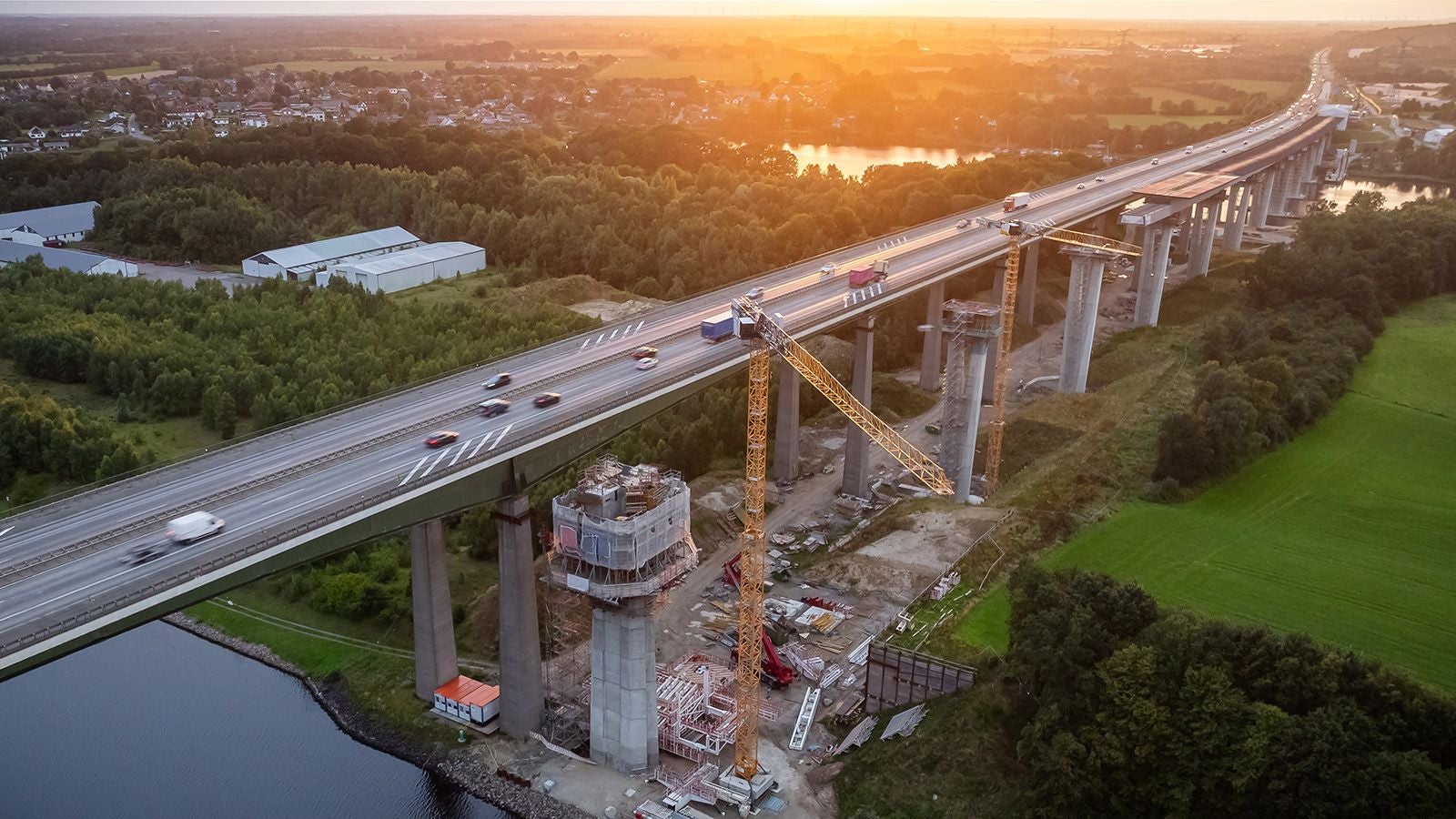
Sovereign wealth and public pension funds are no longer passive allocators of capital. They’ve become new principals that originate deals, build platforms, and operate assets.
The takeways
- Sovereign wealth funds and public pension funds, now some of the world’s largest pools of patient capital, are building the infrastructure of the 21st-century economy.
- By 2030, sovereign wealth and public pension assets are projected to total US$22.4 trillion and US$36.3 trillion, respectively.
- AI infrastructure is an important proving ground for new principal investors, linking data centres, power, and semiconductors together, and testing if the operation of assets can keep pace with capital investments.
The largest data centre transaction announced last year wasn’t anchored by a technology company or a private equity fund. It was led by a sovereign investment vehicle. In 2025, MGX, an Abu Dhabi fund founded only a year earlier, anchored the roughly US$40 billion acquisition of Aligned Data Centers, alongside BlackRock, Nvidia, and Microsoft.
For years, sovereign wealth funds and public pension plans were understood as the patient money at the back of the room, limited partners who committed capital to other people’s funds and waited.
In the largest such institutions, the behaviour has inverted. These funds no longer rely solely on outside managers. They originate transactions rather than waiting for them. They build platforms rather than buying single assets. They take control positions and operate what they own. And in the defining investment theme of the decade, the build-out of artificial intelligence and the physical infrastructure supporting it, they’re often the lead capital rather than the co-investor.
We anticipate that as these funds grow larger, the shift will accelerate and gain momentum. PwC analysis projects that, over the next five years, the assets of sovereign wealth funds and public pension funds will rise to $22.4 trillion and $36.3 trillion, respectively. And, as we’re seeing in other areas of the economy, the pool is growing more concentrated—to the point at which a few dozen large institutions are positioned to set the tone. They won’t merely participate in the megatrends reshaping the global economy. Increasingly, they’ll enable, accelerate, and own them.
This growth is also recasting the relationship with traditional asset managers. In October 2026, Apollo Global Management agreed to acquire a nearly 10% stake in Mubadala Capital. The deal points to sovereign capital’s increased influence: a leading private markets manager is investing in a sovereign-owned asset manager, rather than simply raising capital from one.
Whether you’re a company, a general partner, or a government, you’ll find that sovereign investors are no longer the limited partner you’re raising money from; they’re the principal sitting across the table. (And they’re not alone. Development banks are also taking on a larger role in shaping 21st-century infrastructure, though that role is beyond the scope of this analysis.)
Our guide to the strategic opportunities and challenges in this world of new principal investors rests on two bodies of evidence: a comparative analysis of the world’s 350 largest sovereign and pension investors, and a transaction-level review of leading funds across Canada, the Gulf States, and Singapore, spanning 2023 to mid-2026. (Where figures are third-party estimates rather than disclosures, we say so. For more on how this report is constructed, see the methodology section, below.)
A world in need of capital
The structural shifts reshaping the global economy are, almost without exception, capital-intensive, long-duration, and physical. They’re driven by investors that are patient and are willing to commit large sums for a long time, against assets that take years to build. PwC’s Global Infrastructure Outlook estimates that some $151 trillion of investment is needed by 2050 to modernise the digital infrastructure, clean energy systems, and resilient transport that underpin economic progress. That figure is broadly consistent with the G20 Global Infrastructure Hub’s estimate of around $94 trillion required by 2040. Data centres are among the fastest-growing pieces of that build-out: PwC’s analysis of the hyperscale sector projects data centre investment approaching $1 trillion by 2027.
Scale sets the tone
Today, the 200 largest sovereign wealth funds and public pension funds together steward roughly $34 trillion of assets, divided between about $15.5 trillion in SWFs and $18.5 trillion in public pensions. Influence in this realm sits with a few dozen institutions that can write the largest cheques and lead the largest deals.
According to our analysis, the top ten funds hold roughly 41% of the combined sovereign and pension pool, the top 25 hold 61%, and the top 50 hold 77%. The principal investor model is also spreading. Several of the largest funds established since 2015 have already reached significant scale: Indonesia’s Danantara, founded in 2025, opened with assets well into the hundreds of billions; the UK’s pooled local-government schemes have built large books; and Abu Dhabi’s MGX targets more than $100 billion.
Increasing influence
Three signs of growing agency
The shift from allocator to principal is visible in three forms of greater agency: owning and operating assets directly, building investment platforms with partners, and creating new companies or capacity where no mature asset yet exists.
Owning and operating. Funds are gaining more control by investing directly, taking companies private, and building in-house capabilities, behaving less like limited partners and more like principals in their own right. In 2025, the Ontario Teachers’ Pension Plan publicly refocused on a classic private equity strategy: improving the operating performance of its portfolio companies. In July 2025, La Caisse took Quebec renewables developer Innergex fully private. The Saudi Public Investment Fund now behaves less like an allocator than a sovereign holding company, building and controlling assets at home, with an extensive portfolio of domestic operating companies across many major sectors.
When our analysis combines parent companies and subsidiaries, it shows several funds that have recorded hundreds of transactions. The pace of deals is accelerating, and the Government of Singapore Investment Corporation (GIC), Abu Dhabi’s Mubadala Investment Company, the Canada Pension Plan Investment Board (CPP Investments), and the Abu Dhabi Investment Authority (ADIA) are leading in transaction volume across the available data that we analysed. Because database coverage varies fund by fund, these counts shouldn’t be read as a precise ranking of activity. But they do show that these principal investors are among the most active institutional dealmakers in the market, transacting at a cadence typically associated with large private capital firms, not allocators waiting for managers to bring them opportunities.
Building platforms with partners. Rather than buying a single asset, funds are increasingly assembling repeatable vehicles that combine their balance sheet scale with a partner’s sector expertise. In March 2025, the Abu Dhabi Developmental Holding Company (ADQ) and Energy Capital Partners announced a $25 billion US-based power partnership. Later that year, Qatar Investment Authority (QIA) and Brookfield formed a $20 billion AI infrastructure joint venture. Structures like these can provide scale, retain governance, and compress fees—and they are another sign of the shift from passive investor to principal for these funds.
Creating new capacity. At the most active end of the spectrum, the largest sovereign funds create companies, ecosystems, and infrastructure where there are no mature assets to buy. In May 2025, Saudi Arabia’s Public Investment Fund (PIF) stood up Humain, a sovereign AI company that has since set out multi-gigawatt compute ambitions. MGX, the Abu Dhabi investment firm mentioned above, was purpose-built as a vehicle for AI infrastructure and semiconductors. And in the UK, Canada’s La Caisse took a 20% equity stake in the Sizewell C nuclear project, alongside the UK government, EDF, Centrica, and Amber Infrastructure. In these types of investments, funds aren’t simply seeking exposure to a theme; they’re holding and building assets, and accepting development risk, to bring new capacity into being.
AI in the portfolio
Artificial intelligence is the proving ground
Nowhere is the principal investor shift clearer than in artificial intelligence and its supporting infrastructure. According to Global SWF figures, roughly $66 billion of state investor capital flowed into AI and digitisation in 2025 alone. The US was the dominant destination for this capital, while flows into China dwindled to around $4 billion. The gap between regions will widen as access to advanced technology becomes a strategic dividing line.
The same platforms appear across Canadian, Gulf States, and Singaporean portfolios. Singapore’s GIC and Canada’s CPP Investments sit together in the Equinix xScale joint venture, which targets more than $15 billion of investable capital for US hyperscale data centres. CPP Investments joined Blackstone in the acquisition of Australian data centre operator AirTrunk. GIC and ADIA together back Vantage in Asia-Pacific data centre build-outs. And Ontario Teachers’ Pension Plan and Brookfield Infrastructure jointly own Compass Datacenters, a US developer and operator of large-scale data centre campuses, which they reportedly acquired for about $5.5 billion in 2023. At the frontier-model layer, Gulf States funds are the marginal capital: Qatar’s QIA is among the principal backers of leading AI labs, and our analysis of public filings shows that MGX invested across OpenAI, xAI, and the Stargate compute project.
Because electricity is a binding constraint on the growth of data centres, these institutions are also building partnerships with power companies. In March 2025, ADQ and Energy Capital Partners formed a $25 billion investment partnership, targeting 25 gigawatts of power generation and energy infrastructure projects, primarily in the US. In January 2025, PSP Investments took a $2.8 billion stake in American Electric Power’s transmission companies alongside KKR. And in September 2025, CPP Investments agreed to acquire a roughly 13% stake in Sempra Infrastructure Partners for about $3 billion, again alongside KKR. The following month, CPP committed a further $1 billion to AlphaGen, an 11-gigawatt US power platform.
The need for reliable power complicates the investment picture. Data centres require dependable, continuous power, which in many markets means investing in gas-fired generation alongside renewables, grids, and other transition assets. The same institutions are therefore backing both elements: La Caisse, for example, had CA$226 billion (roughly US$163 billion) in climate investments at the end of 2025. Rather than treating generation and the energy transition as mutually exclusive, these investors are underwriting both, where demand is durable and the economics are compelling.
The geography of investment
Where money is moving
Across the roughly 2,723 disclosed transactions in our sample, North America accounts for about 42% of activity, and Europe and Asia-Pacific are the next-largest destinations. Because the data counts deals rather than dollars, and includes both announced and completed transactions, it should be read as an indication of geographic activity rather than a precise measure of capital allocation. Even so, the pattern is clear: for many of the world’s largest principal investors, global ambition is increasingly being expressed through a heavier US tilt.
That doesn’t mean that funds are converging on a single geographic strategy. The same map reflects three distinctive investment rationales.
The Gulf pivots to US markets. Access to US technology, AI, and semiconductors is part of the rationale for investment. Gulf sovereign funds are deepening their US investment exposure in strategically important sectors. QIA has pledged $500 billion of US investment over a decade; MGX aims to deploy roughly 80% of its investments there; the ADQ and ADIA power and data centre bets are US-centric.
PIF takes a domestic turn. Saudi Arabia’s PIF is the one fund in this set whose international appetite is deliberately contracting. From a peak of foreign allocation near 30%, it’s cutting such allocation towards 18–20%, redirecting capital to domestic Saudi Vision 2030 priorities and sovereign AI, and imposing portfolio-wide spending discipline.
Canada and Singapore stay global. The Canadian plans and the Singaporean funds remain globally deployed, concentrated in the US and Europe, and, increasingly, India. Several Canadian plans and the state-owned Singaporean investment company Temasek are also among the more active capital recyclers in our sample—selling investments and redeploying the proceeds into new ones. At the same time, they retain meaningful investment at home. Canadian plans continue to invest domestically across sectors, including infrastructure and technology, while Temasek retains substantial holdings in Singapore-headquartered companies.
Note that not all of these funds are balanced buyers and sellers. Consistent recyclers, such as Temasek and Qatar’s QIA, alongside Canada’s Ontario Municipal Employees Retirement System (OMERS), complete close to one divestment for every acquisition; CPP Investments and La Caisse also turn capital over steadily. But, at the other end of the scale, Mubadala, ADIA, and Canada’s British Columbia Investment Management Corporation (BCI) are near-pure accumulators, making between five and seven acquisitions for every divestment.
A look ahead
Questions for the next phase of investment
As we look ahead, the shift from allocator to principal is raising a new set of questions for the world’s largest funds. Preqin and PwC independently project that by 2030, alternative assets will reach the low to mid-$30 trillions. At the same time, the traditional line between investor and fund manager continues to blur; demand for AI infrastructure is set to remain strong; and new state-backed investment funds, such as Indonesia’s Danantara and the CA$25 billion (roughly US$18 billion) Canada Strong Fund, are entering the market. The next phase will be shaped by both how much investors deploy and how well they manage the added responsibility that comes with taking a more active role.
In this context, three questions stand out.
How much risk is concentrated in a diversified portfolio? Many funds are pursuing similar investment platforms and themes—converging in particular on investments in AI, data centres, and power. That means a portfolio spread across regions and asset classes may still be exposed to the same set of underlying risks. Measuring and managing that risk is becoming a core part of portfolio construction rather than a secondary concern.
Can execution keep pace with ambition? As funds acquire controlling stakes, they inherit operating responsibilities that a limited partner doesn’t usually bear. And as they invest capital more directly, they may find themselves constrained by their ability to originate investments, conduct diligence, and operate complex assets at scale. Building the required capability, the talent, the systems, and the governance is a slower process than committing the capital, and it’s where the most significant institution-building is now happening.
How can energy and climate objectives work together? The need to expand data centre capacity is increasing the demand for reliable, round-the-clock electricity, even as funds pursue climate goals. Power generation and energy transition can both be sound investments, and many funds are deliberately underwriting them side by side. Understanding how the two fit within a single coherent strategy and articulating that to beneficiaries, governments, and partners is an exercise in narrative and governance as much as in investing.
Methodology
About the analysis
The quantitative analysis draws on a sample of 16 large sovereign and pension funds: the eight Canadian Maple-8 plans (AIMCo, BCI, CPP Investments, HOOPP, La Caisse, OMERS, Ontario Teachers’ Pension Plan, and PSP Investments) and eight major sovereign funds (ADIA, ADQ [which consolidated with L’imad in January 2026], GIC, KIA, Mubadala, PIF, QIA, and Temasek), together with associated transaction data spanning from 2023 to early 2026. Coverage isn’t uniform across sources, so individual charts show only the funds for which comparable data was available. Figures in this article are drawn from fund disclosures; counterparty announcements; regulatory filings; the Global SWF league table and 2026 Annual Report; PitchBook transaction data (downloaded 7 August 2026, covering January 2023 to August 2026); and corroborating projections from Invesco, Preqin, PwC, and State Street. Funds that don’t disclose assets under management, including ADIA, GIC, and QIA, are shown as third-party estimates and should carry an error band. Headline partnership figures, for example the $25 billion ADQ–ECP vehicle and the $20 billion QIA–Brookfield joint venture, represent multiyear capacity or intent rather than capital deployed, and aren’t comparable to closed-deal values. Deal-count ratios use cumulative data with partial coverage for some funds and are directional rather than precise. Projections to 2030 are model-based outlooks, not forecasts, and are sensitive to oil prices and equity-market performance.
Related content

Global Infrastructure Outlook 2025–50: Accelerating human progress
A staggering US$151.1 trillion of capital is needed to build and maintain infrastructure in the coming decades.
19 min read

Where $31.6 trillion of capex flows in the era-defining AI build-out
AI is turning data centre investment into a recurring, multi-decade cycle. Our outlook explores how various scenarios could impact where capital flows.
29 min read

CEO confidence holds as AI gains shift
A follow-up to our flagship CEO Survey reveals movement beneath otherwise steady headline numbers.
8 min read
Get in touch
Laurent Depolla
Principal Investors Practice, Partner
PwC Middle East
Mattias Gunnarsson
Principal Investors Practice, Partner
PwC United States
Eric Janson
Global Private Equity and Principal Investors Leader, Partner
PwC United States
Kai Lakhdar
Principal Investors Practice, Partner
PwC Canada
Tarek Shoukri
Principal Investors Practice, Director
PwC United States
